



Seattle’s AI Boom Meets a Tough Reality for Tech Workers
3 min read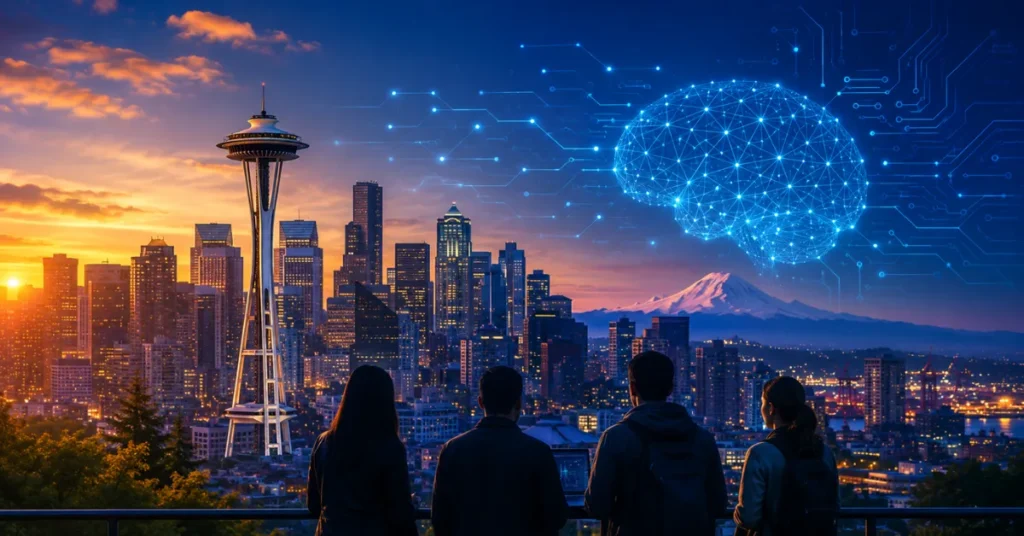
Seattle is entering a defining moment in the artificial intelligence era. While the city is working to strengthen its position as a global AI hub, many local technology professionals are also facing uncertainty as major companies continue reshaping their workforces in the age of AI.
That contrast was on full display during the opening reception of Seattle AI Week 2025 at Pier 70 on Monday evening. The event highlighted optimism around AI innovation, startup growth, and the region’s future. At the same time, conversations among attendees were dominated by reports of upcoming layoffs at Amazon, reminding many that AI’s rapid rise is bringing both opportunities and difficult changes.
Seattle’s technology industry was built on the success of giants like Microsoft and Amazon. Now, as those companies invest heavily in artificial intelligence, they are also restructuring their organizations to improve efficiency, resulting in workforce reductions that are reshaping the local tech landscape.
Speaking at the event, Washington Governor Bob Ferguson acknowledged both the promise and the challenges created by AI.
“AI, and the future of AI, and what that means for our state and the world — each day I do this job, the more that moves up in my mind in terms of the challenges and the opportunities we have,” Ferguson said. He pointed to Washington’s strong concentration of AI jobs and emphasized that the state aims to maximize AI’s benefits while limiting its negative impacts.
Seattle AI Week was launched last year by the Washington Technology Industry Association (WTIA) after a Forbes ranking of the nation’s top 50 AI startups failed to include a single Seattle company. According to WTIA’s Nick Ellingson, organizers wanted to showcase the region’s growing AI ecosystem and encourage collaboration beyond traditional technology circles.
The broader goal is to highlight the innovation already taking place across Seattle while creating stronger connections among entrepreneurs, researchers, investors, and business leaders.
A key question facing the region is whether the latest wave of layoffs can inspire a new generation of startup founders. Historically, large-scale layoffs in Seattle have not consistently produced a surge of successful new companies. However, many believe the AI revolution could create different outcomes this time by lowering barriers to building products and launching businesses.
WTIA board chair Arry Yu believes Washington remains one of the world’s leading AI centers.
“Washington has so much opportunity. It’s one of the few capitals of AI in the world,” Yu said. “People talk about China, people talk about Silicon Valley — there are a few contenders, but really, it’s here in Seattle.”
She added that while technology and data drive innovation, it is the strength of the local community that sets Seattle apart.
Still, some industry leaders believe the city has room to improve its startup culture. Nathan Lambert, senior research scientist at the Allen Institute for AI, described Seattle’s AI ecosystem as relatively quiet, with many professionals remaining focused inside their own companies instead of building stronger connections across the wider community.
Lambert noted that Seattle does not need to become another Silicon Valley or San Francisco. Instead, the region can adopt some of the collaboration, networking, and entrepreneurial culture that has helped the Bay Area remain a global technology leader.
As artificial intelligence continues transforming the workplace, Seattle stands at an important crossroads. The city has world-class talent, leading research institutions, major technology companies, and growing AI investment. The next challenge will be turning those advantages into a thriving startup ecosystem that is less dependent on the decisions of large corporations.
Whether today’s workforce changes become tomorrow’s startup success stories remains uncertain. But if Seattle can convert this period of disruption into innovation, the region may once again create its next generation of technology leaders from within its own community.
Also read : EU Lawmaker Probing Pegasus Spyware Was Hacked, Researchers Say