




Viral Debate Questions Whether Seattle Has Turned Against AI
4 min read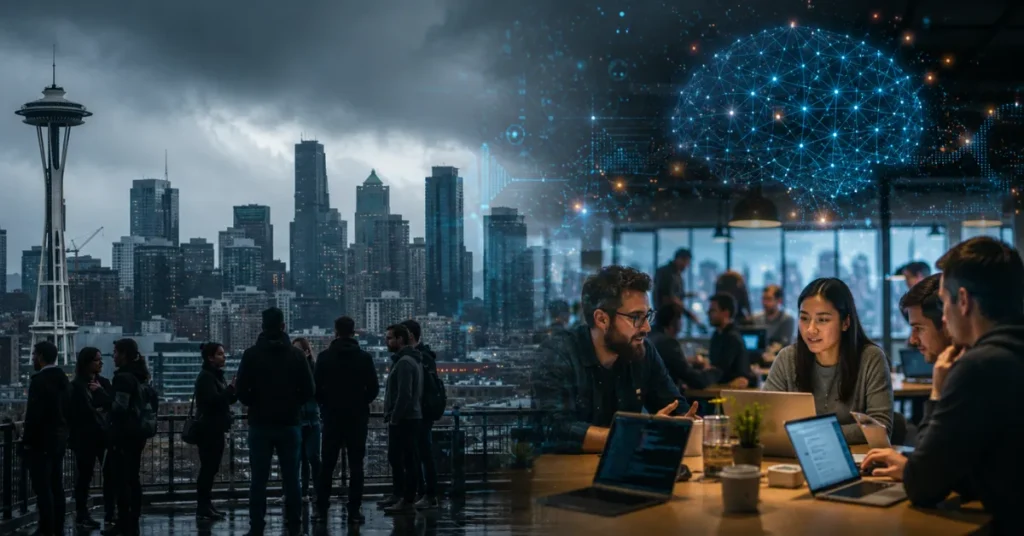
A viral blog post from a former Microsoft engineer has sparked a lively debate across the tech community after suggesting that Seattle has become unusually skeptical of artificial intelligence.
The discussion began when Jonathon Ready, who recently left Microsoft to launch his own startup, shared his experiences introducing Wanderfugl, an AI-powered mapping project, to engineers around the world.
According to Ready, audiences in cities such as Tokyo and San Francisco responded with curiosity and enthusiasm. Seattle, however, felt noticeably different.
“Bring up AI in a Seattle coffee shop now and people react like you’re advocating asbestos,” he wrote, arguing that conversations about AI often receive an unexpectedly negative response.
His comments quickly gained traction on Hacker News, LinkedIn, and other online communities, where technology professionals debated whether his observations reflected reality or exaggerated a more nuanced situation.
Microsoft’s AI Experience at the Center of the Argument
Ready believes much of Seattle’s AI skepticism can be traced to the experience many engineers have had inside Microsoft.
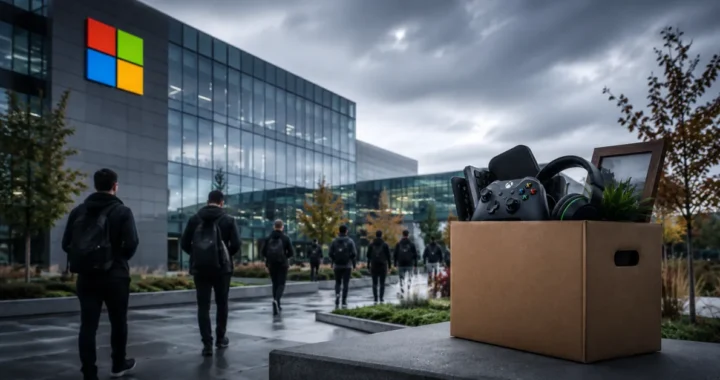
Based on his own time at the company and discussions with former colleagues, he described an environment where artificial intelligence became the safest career path during periods of significant layoffs. At the same time, employees were encouraged to rely heavily on Copilot tools that, in some situations, felt less efficient than completing tasks manually.
He argued that this combination created frustration among many experienced engineers, leading some to view AI as both overhyped and difficult to embrace.
Tech Leaders Offer Different Perspectives
Ready’s article received hundreds of responses, with opinions split over whether he accurately captured Seattle’s current technology culture.
Former Indeed Head of AI Ethics Trey Causey said the post resonated with him. He recalled avoiding mentioning the “AI” portion of his job title during conversations with people around Seattle because of what he perceived as negative reactions. Causey even suggested the city may have become one of the most skeptical major U.S. tech hubs when it comes to AI.
Others strongly disagreed.
Seattle entrepreneur Marcelo Calbucci argued the issue has less to do with geography and more to do with workplace culture.
According to Calbucci, employees at large technology companies have experienced layoffs, increased workloads, and burnout while simultaneously being asked to adopt new AI tools. Startup founders, however, remain energized by the opportunities AI creates.
“If you hang out with founders and investors in Seattle, the energy is completely different,” he wrote.
Startup Community Sees a Different Seattle
Venture capitalist Chris DeVore also challenged Ready’s conclusions.
He described the post as “clickbait-y,” arguing that it unfairly blended the experiences of individual employees at major technology companies with the broader Seattle startup ecosystem.
His comments echo a growing narrative that Seattle is experiencing two very different AI stories.
On one side are employees at large corporations dealing with restructuring, layoffs, and changing workplace expectations. On the other are startup founders and investors who view generative AI as one of the biggest technology opportunities in years.
A City With Healthy Skepticism?
Another perspective came from Ryan Brush, a director at Salesforce, who suggested Seattle’s cautious attitude toward AI may stem from the city’s longstanding culture rather than recent workplace experiences.
He pointed to Seattle’s history of questioning centralized authority—from the grunge movement to the World Trade Organization protests—as evidence that local residents often approach transformative technologies with greater skepticism.
According to Brush, concerns about AI concentrating power among a small number of technology companies may naturally resonate more strongly in Seattle than in some other innovation hubs.
Can Seattle Lead the AI Era?
Despite the debate, few disagree that Seattle remains one of the world’s strongest technology ecosystems.
The region is home to global technology giants including Microsoft and Amazon, major research organizations such as the Allen Institute for AI, and the University of Washington, one of the country’s leading AI research institutions.
At the same time, many investors believe Seattle has yet to produce the kind of breakout AI startup success stories that have emerged in the San Francisco Bay Area.
Ready concluded that while Seattle still possesses world-class engineering talent, it may have lost some of the confidence that once defined its ability to change the world through innovation.
Whether that means Seattle “hates AI” remains highly debatable.
The viral discussion instead highlights a more complex reality: a city balancing the pressures of Big Tech transformation with the optimism of a growing startup ecosystem. As artificial intelligence continues reshaping industries, Seattle’s future may ultimately depend on how successfully it bridges those two worlds.
Also read : EU Lawmaker Probing Pegasus Spyware Was Hacked, Researchers Say