



Countries Move to Restrict Social Media for Kids
2 min read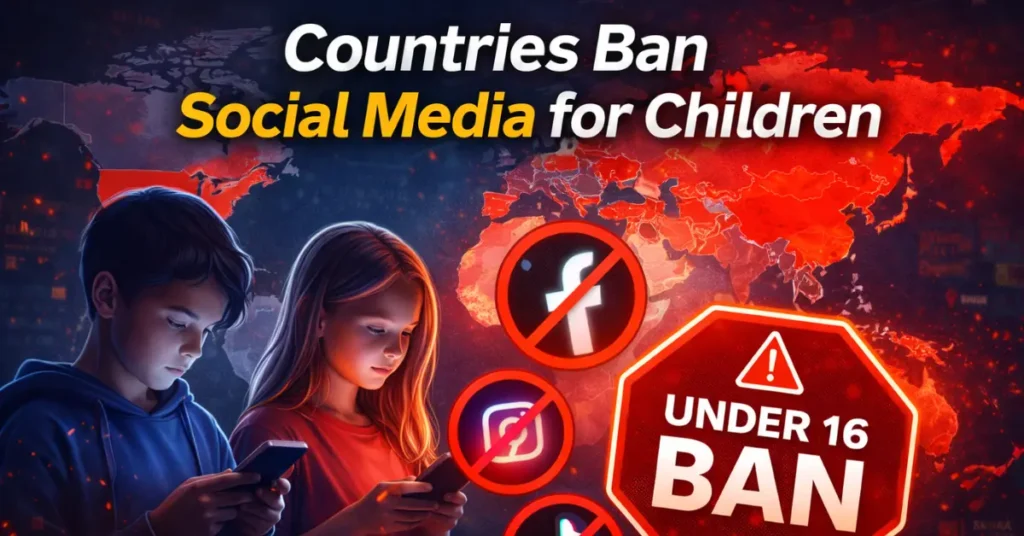
A growing number of countries are taking a hard look at how social media affects children—and many are now moving toward strict limits or outright bans. What started as a bold step by one nation is quickly turning into a global trend, as governments try to balance online freedom with child safety.
At the center of this shift is Australia, which became the first country to introduce a nationwide ban on social media for children under 16 in December 2025. The law blocks access to major platforms like Facebook, Instagram, TikTok, Snapchat, and YouTube, though services such as WhatsApp and YouTube Kids are excluded. Authorities have made it clear that tech companies must enforce the rules or face heavy fines of up to $49.5 million AUD.
The move has sparked a wave of similar proposals across the globe.
In Denmark, lawmakers are preparing a ban for users under 15, with strong political backing already secured. If approved, it could become law by mid-2026. The country is also developing a “digital evidence” app that may help verify users’ ages.
France is also moving forward, with lawmakers passing a bill to restrict social media use for children under 15. The proposal has support from President Emmanuel Macron, although it still needs Senate approval before becoming law.
In Germany, discussions are ongoing. Chancellor Friedrich Merz has floated a similar idea to block under-16 users, but coalition disagreements could slow progress.
Meanwhile, Greece has taken a clearer stance. Prime Minister Kyriakos Mitsotakis announced plans to implement a ban for children under 15 starting in January 2027, citing rising anxiety, sleep issues, and the addictive nature of social platforms.
In Asia, Indonesia has already announced a ban for users under 16 across major platforms like TikTok, Facebook, and YouTube. Malaysia is also preparing to introduce similar restrictions within 2026.
Smaller European nations are joining the conversation too. Slovenia is drafting legislation targeting platforms like TikTok and Instagram for users under 15. Spain is considering a ban under 16, along with stricter accountability rules for social media executives.
Even the United Kingdom is exploring its options. While no final decision has been made, the government is consulting parents and experts and may also look into limiting addictive features like endless scrolling.
A debate far from settled
These efforts are driven by growing concerns over cyberbullying, mental health issues, and online safety risks for young users. However, critics argue that such bans may go too far. Groups like Amnesty Tech have raised concerns about privacy, especially around age verification systems, and question whether these restrictions will truly work in a digital-first world.
Still, momentum is clearly building. As more countries test these policies, the global approach to children and social media could be entering a major turning point—one that reshapes how the next generation experiences the online world.
Also read : Teen YouTuber Raises $1.23M for Viral Meme Trading App