





Type One Energy Raises $200M for Fusion Power Plant
3 min read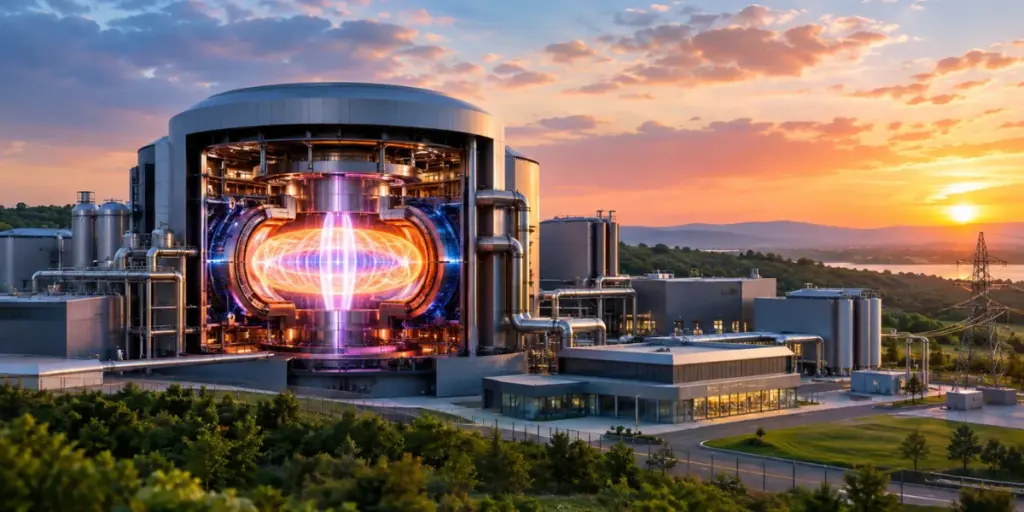
Fusion power startup Type One Energy has raised $200 million as it works toward building a commercial fusion power plant in Tennessee by 2034.
The Knoxville, Tennessee-based company, founded in 2019, announced the new funding on Tuesday. The Series B round gives Type One a major boost as it moves among the better-funded companies competing to make fusion energy commercially viable.
Fusion remains one of the most expensive areas of energy technology. Developing a working power plant requires advances across plasma physics, materials science and computing, meaning even hundreds of millions of dollars can quickly be spent.
Still, Type One CEO Christofer Mowry said the latest investment could put the company roughly halfway toward the funding needed for its planned 400-megawatt commercial power plant, known as Infinity Two.
If Type One can bring Infinity Two online by 2034, Mowry believes the company could build its first commercial plant with less capital than many competing fusion companies, even if it needs additional funding rounds along the way.
A different approach to building fusion plants
Type One’s strategy is centered on avoiding the huge costs associated with building everything itself.
Rather than becoming a fully vertically integrated company, Type One plans to design the power plant and many of its major components while relying on a selected network of outside suppliers to manufacture and build them.
Mowry said this model allows the company to reduce the amount of capital it needs to raise. Building and maintaining large manufacturing facilities would require significant spending before the company even begins generating power.
“I used to run a big nuclear manufacturing company. That’s expensive,” Mowry said.
The company has already begun building its supplier and technology network. Type One plans to construct its first two fusion devices at the Tennessee Valley Authority’s Bull Run site in Tennessee. Infrastructure consultant AECOM is also working on engineering for Infinity Two.
Type One is additionally using technology from fellow fusion company Commonwealth Fusion Systems. The company has licensed Commonwealth’s high-temperature superconducting magnet technology, which is expected to play an important role in Type One’s reactor design.
The risk of relying on suppliers
Type One’s strategy effectively makes it an “integrator” — a company that brings together components produced by different suppliers rather than manufacturing everything internally.
That approach can reduce manufacturing risk and give Type One access to specialized expertise. For example, AECOM has around 10,000 employees, many of whom are engineers with specialized knowledge that a smaller company like Type One would struggle to replicate internally.
But outsourcing also creates a different challenge: supplier management.
Boeing offers a well-known example of the potential risks. The aircraft maker relied on Spirit AeroSystems for fuselage sections used in aircraft including the 737 and 787. Following several quality-control problems, including a door plug blowing out during an Alaska Airlines flight in 2024, Boeing moved to acquire Spirit and bring more manufacturing in-house.
Type One is betting that it can manage similar integration risks without taking on the much higher costs of building everything internally.
“These business models are successful because they let companies focus on managing risk and developing a high level of competency in their slice of the value chain,” Mowry said.
The $200 million Series B was led by repeat investor Breakthrough Energy Ventures and Clutterbuck Capital. Lowercarbon Capital, Siemens Energy Ventures and SiteGround Capital also participated.
Before the latest round, Type One had raised $82.5 million through an extended Series A. The new funding gives the company additional capital as it works toward its goal of delivering commercial fusion power in the next decade.
Also read : Trump’s ‘Super Intelligence’ Order Sends .si Domains Soaring