





Harbinger Teams Up With Frazer for Hybrid Ambulances
2 min read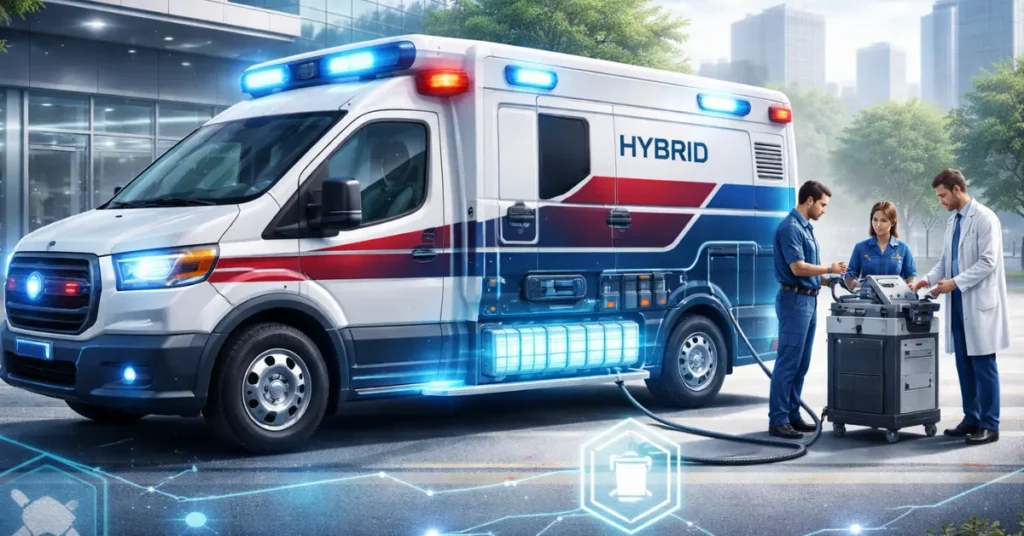
Electric trucking startup Harbinger is expanding into a new and critical space—emergency vehicles. Despite being a relatively young company, Harbinger is gaining traction thanks to its flexible EV platform, and its latest partnership shows just how versatile that system can be.
On Wednesday, Harbinger announced a deal with Frazer, a company with over 70 years of experience in building ambulances. Under the agreement, Frazer will start producing ambulances and larger mobile healthcare units using a hybrid version of Harbinger’s vehicle platform.
This hybrid system is primarily electric but includes a gas-powered engine to extend range when needed. For emergency services, where uptime is critical, that combination offers a practical balance between efficiency and reliability.
The partnership goes beyond just vehicles. Frazer will also tap into Harbinger’s growing energy storage business, which the startup introduced earlier this year through a collaboration with Airstream. This means Frazer will use battery-powered auxiliary systems to run medical equipment—both in new hybrid vehicles and even in older, traditional ambulances.
The move highlights a broader trend: while the passenger EV market in the U.S. faces some challenges, companies in the commercial and specialty vehicle space are pushing forward. In fact, another startup, Grounded, recently worked with Colgate to develop mobile dental care units—showing how EV platforms are opening new possibilities.
At the core of Harbinger’s momentum is its adaptable chassis design. CEO John Harris says the platform can be easily modified—lengthened, shortened, or equipped with different battery setups or hybrid systems—depending on customer needs. This same base is already being used across a wide range of vehicles, including RVs built with THOR Industries, delivery vans for FedEx, and now ambulances.
The efficiency comes from standardization. Harris noted that nearly all parts—around 99.5%—are shared across different vehicle types, helping reduce costs and simplify production. That strategy has helped Harbinger raise more than $300 million so far.
For Frazer, the decision to adopt hybrid technology was straightforward. CEO Laura Griffin explained that the system lowers total ownership costs and improves reliability—two key factors for organizations like hospitals, municipalities, and emergency responders.
Another big advantage is the new battery-powered auxiliary units. These systems can run medical equipment inside ambulances without relying on traditional generators or draining the vehicle’s main power source. That means quieter operation, lower emissions, and better working conditions for first responders.
Looking ahead, Harris believes the energy storage side of the business could grow even faster than vehicle sales. With thousands of ambulances in operation—and increasing restrictions on gas generators in places like California—there’s strong demand for cleaner, battery-based alternatives.
As Harbinger continues to scale, its hybrid approach may prove especially appealing in industries where reliability, flexibility, and sustainability all matter at once.
Also read : Ex-Apple Designer Joins Hark to Rethink AI Interfaces