





Anthropic’s ‘Mythos’ Rollout Raises Questions Beyond Security
3 min read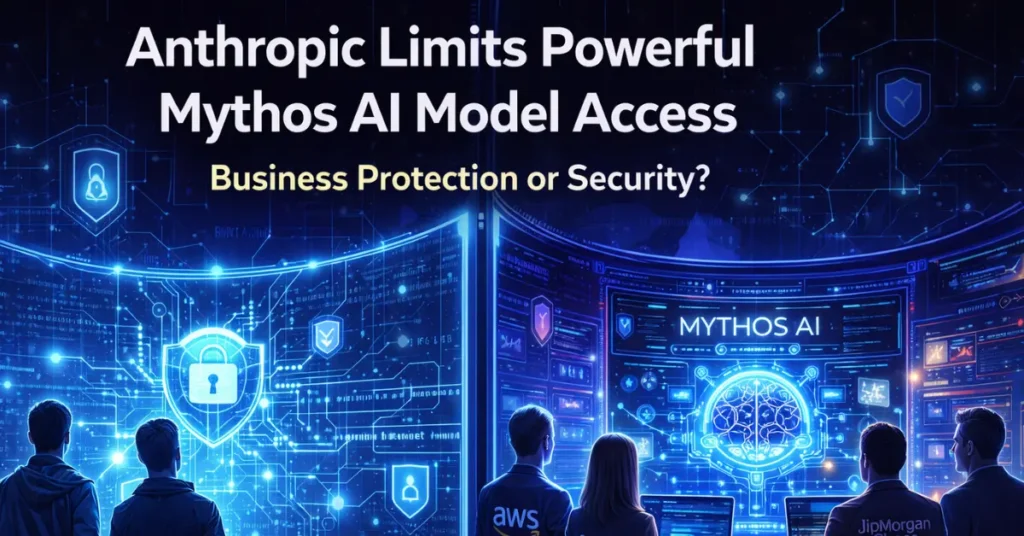
AI company Anthropic is taking a cautious approach with its latest model, Mythos—but not everyone is convinced the move is only about protecting the internet.
The company recently revealed that it is limiting access to Mythos, claiming the model is highly capable of discovering software vulnerabilities. Instead of releasing it publicly, Anthropic plans to share it with a select group of major organizations running critical infrastructure, including Amazon Web Services and JPMorgan Chase.
The idea is straightforward: give large enterprises a head start in defending against cyber threats before bad actors can exploit such advanced AI tools. Reports suggest that OpenAI may consider a similar approach for its future cybersecurity-focused models.
Still, some experts believe there’s more going on beneath the surface.
Before Mythos was even announced, Dan Lahav, CEO of AI security firm Irregular, pointed out that finding vulnerabilities is only part of the story. The real concern is whether those vulnerabilities can be meaningfully exploited—either on their own or as part of a larger attack chain.
Anthropic claims Mythos is significantly more capable than its earlier model, Opus. However, that claim hasn’t gone unchallenged. Startup Aisle says it was able to replicate many of Mythos’s reported capabilities using smaller, open-weight models. According to Aisle, cybersecurity isn’t about a single powerful model—it’s about combining the right tools for specific tasks.
That raises an important question: if similar results can be achieved with smaller models, why restrict access so tightly?
Some in the tech community believe the answer lies in business strategy. Limiting access to powerful models like Mythos could strengthen relationships with enterprise clients while keeping cutting-edge technology out of reach for smaller competitors. It may also help prevent “distillation,” a process where developers use advanced models to train cheaper alternatives.
David Crawshaw, CEO of startup exe.dev, argued in a social media post that this kind of restricted rollout could become the new normal. By the time broader access is granted, newer and more advanced models may already be locked behind enterprise deals—keeping smaller labs perpetually behind.
This perspective aligns with a broader trend in the AI space. Frontier labs like Google, OpenAI, and Anthropic are investing heavily in large-scale models, while smaller players increasingly rely on open-source alternatives—some reportedly developed through distillation techniques.
In fact, Anthropic has already raised concerns about attempts by certain firms to copy its models. Alongside Google and OpenAI, it is reportedly working to detect and block such efforts.
Distillation poses a real challenge to the business model of major AI labs. If smaller companies can replicate high-end capabilities at a fraction of the cost, the competitive edge of massive investment starts to fade.
So, is Mythos being restricted purely for safety—or also to protect commercial interests?
For now, it’s likely a mix of both. While the risks of releasing powerful cybersecurity tools too widely are real, controlled rollouts also offer a strategic advantage. As AI capabilities grow, the balance between openness, safety, and profitability is becoming harder to ignore.
Also read : Last Chance: Save Big on TechCrunch Disrupt 2026 Passes