



Wild Zebra Raises $2M to Expand Its AI Tutor for Students
3 min read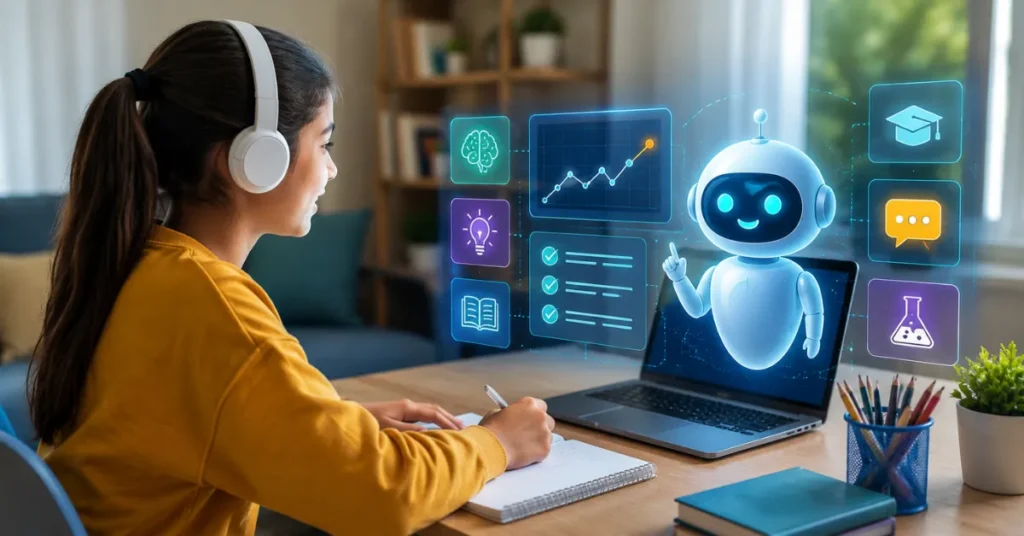
Seattle-based education technology startup Wild Zebra has emerged from stealth with $2 million in funding and an ambitious goal: to reshape how students learn with an AI tutor that teaches through conversation instead of simply providing answers.
Founded by edtech entrepreneur Edan Shahar and AI veteran Erik Selberg, the company has developed an AI-powered tutoring platform that adapts to each student’s learning style, interests, and academic progress. Rather than solving problems for students, the system encourages them to think critically through Socratic-style conversations that promote reasoning and understanding.
The startup has already tested its technology in four schools, reaching more than 6,000 students with an initial focus on math and reading comprehension.
AI That Teaches Instead of Giving Answers
Wild Zebra is taking a different approach from many popular AI chatbots. While students often use general-purpose AI tools to receive instant answers, Wild Zebra is designed to guide them through the learning process step by step.
CEO Edan Shahar said the platform deliberately avoids revealing answers too quickly. Instead, it asks follow-up questions, encourages reflection, and adapts each lesson based on how a student responds.
The company also personalizes lessons around topics students genuinely enjoy. Instead of relying on traditional textbook examples, lessons can incorporate subjects like sports, music, or other personal interests to keep students engaged.
According to Shahar, several teachers involved in early pilot programs reported that students became more focused during lessons and even chose to continue using the AI tutor outside the classroom.
Competing in a Growing AI Education Market
The AI education sector has become increasingly competitive.
Recent launches such as Google’s Guided Learning Mode and OpenAI’s ChatGPT Study Mode have joined established education platforms like Khan Academy’s Khanmigo, giving students more AI-powered learning options than ever before.
Shahar believes these announcements reinforce Wild Zebra’s strategy, saying they validate the idea that education is one of the strongest use cases for artificial intelligence.
Rather than competing as a broad-purpose chatbot, Wild Zebra focuses exclusively on students in grades 3 through 10. The company believes this specialization allows it to deliver a more personalized learning experience than general AI assistants with education features added later.
Personalized Learning for Every Student
Wild Zebra’s AI continually builds a learning profile for every student.
The platform combines teacher feedback, classroom performance, assessments, and ongoing conversations to understand how each student learns best. As students continue using the system, it identifies learning gaps that may have developed years earlier while also allowing advanced learners to move ahead at their own pace.
Teachers remain closely involved through an analytics dashboard that highlights student progress and identifies areas where additional classroom support may be needed.
Shahar describes the AI as a virtual learning specialist working alongside every student, helping teachers better tailor instruction without replacing them.
Backed by Experienced Founders
Wild Zebra currently employs eight people and is not yet generating revenue.
The company plans to introduce an implementation fee for schools beginning in fall 2025, although final pricing has not yet been announced. It also intends to launch a direct-to-consumer version that students can use at home.
The startup was founded after Shahar returned from helping lead Israel’s national quantum computing initiative. Previously, he co-founded travel technology company Utrip and spent nearly a decade leading education company Test Innovators.
He later partnered with CTO Erik Selberg, a longtime technology executive whose career includes leadership positions at Microsoft, eBay, and Grab. Selberg also co-created the MetaCrawler search engine during the early days of the web.
Multi-Model AI Focuses on Accuracy
Wild Zebra’s platform uses multiple large language models depending on the task being performed.
According to Shahar, this flexible architecture improves accuracy, strengthens privacy protections, and helps reduce AI hallucinations that could result in incorrect educational content.
A key partnership with the Educational Records Bureau (ERB) also gives the platform access to anonymized student trajectory data, helping the AI better understand each learner’s academic progress before tailoring lessons.
As Wild Zebra prepares for a broader rollout, the company believes its highly personalized, conversation-driven AI tutor can give both students and teachers a more effective learning experience while addressing growing concerns about AI simply becoming another shortcut for homework.
Also read : EU Lawmaker Probing Pegasus Spyware Was Hacked, Researchers Say