




OpenAI Eyes 5% Equity Plan for U.S. AI Wealth Fund
3 min read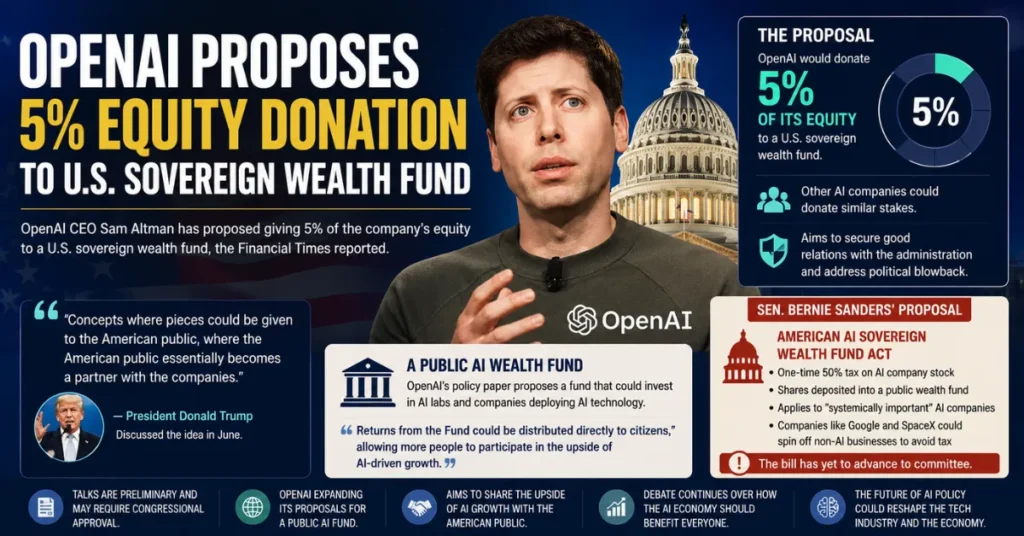
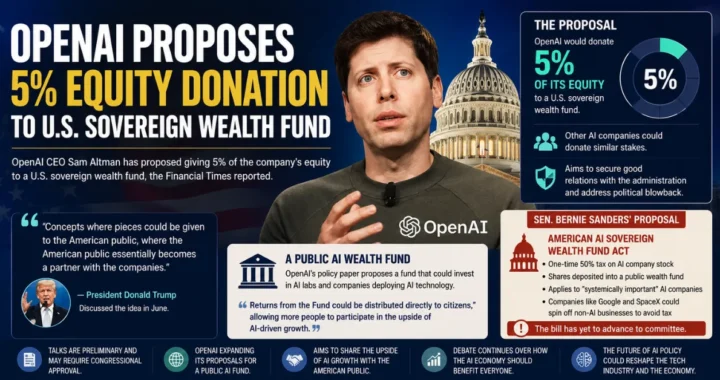
OpenAI is reportedly exploring a proposal that could see the company donate 5% of its equity to a future U.S. sovereign wealth fund, a move aimed at strengthening ties with the federal government while allowing Americans to benefit from the rapid growth of artificial intelligence.
According to a report from the Financial Times, OpenAI CEO Sam Altman has discussed the idea with government officials, citing two people familiar with the matter. The proposal remains in its early stages, and many important details have yet to be finalized.
Proposal Could Extend Beyond OpenAI
Under the reported plan, OpenAI would contribute 5% of its equity to a U.S. sovereign wealth fund. Other leading AI companies could also be encouraged to donate similar ownership stakes, although there is currently no agreement on how such a system would operate or which companies would participate.
The Financial Times reported that one objective of the proposal is to maintain positive relations with the current U.S. administration while helping reduce political criticism surrounding the growing influence and value of artificial intelligence companies.
Because discussions are still preliminary, any official implementation would likely require approval from Congress, making the process significantly more complex.
Earlier Reports Highlighted Similar Discussions
The idea is not entirely new.
In June, CNBC reported that conversations were taking place about giving the American public an ownership interest in leading AI companies. Shortly afterward, President Donald Trump confirmed that he had discussed ideas in which “pieces could be given to the American public,” allowing citizens to effectively become partners in AI businesses.
At the time, however, no percentage of equity was publicly mentioned. The latest report from the Financial Times is the first to suggest a specific figure of 5%.
OpenAI Has Previously Backed a Public AI Fund
The concept also aligns with OpenAI’s broader policy recommendations.
In April, the company released a policy paper titled “Industrial Policy for the Intelligence Age,” outlining the idea of a public wealth fund that would invest directly in AI laboratories and companies deploying artificial intelligence technologies.
According to the paper, returns generated by the fund could be distributed directly to American citizens, enabling more people to share in the economic benefits created by AI regardless of their personal wealth or investment opportunities.
The proposal reflects OpenAI’s belief that the financial gains from artificial intelligence should be shared more broadly as the technology becomes a larger part of the global economy.
Bernie Sanders Proposed a Different Approach
A separate proposal came from Sen. Bernie Sanders in June, taking a much more aggressive stance toward AI companies.
Sanders introduced the American AI Sovereign Wealth Fund Act, which would impose a one-time 50% tax on the stock of systemically important AI companies. Rather than relying on voluntary contributions, the collected shares would be placed into a public wealth fund.
The legislation would apply to major AI firms, including companies involved in data centers, AI infrastructure, and robotics. Businesses such as Google and SpaceX, where artificial intelligence represents only part of their operations, would have the option to separate their non-AI businesses to avoid the proposed tax.
At present, the bill has not advanced to committee, and no legislative action has been taken.
Future of the Proposal Remains Uncertain
For now, OpenAI’s reported equity donation remains only a proposal, with no formal agreement in place. If pursued, the plan could represent a significant shift in how the financial benefits of artificial intelligence are shared between private companies, the government, and the public.
Whether through voluntary equity contributions or new legislation, discussions around public participation in the AI economy are becoming increasingly prominent as artificial intelligence continues to reshape industries and attract massive investment.
Also read : Lime Raises $167M in IPO as Shares Debut on Nasdaq