





Stoke Space Secures $510M to Speed Up Reusable Nova Rocket
3 min read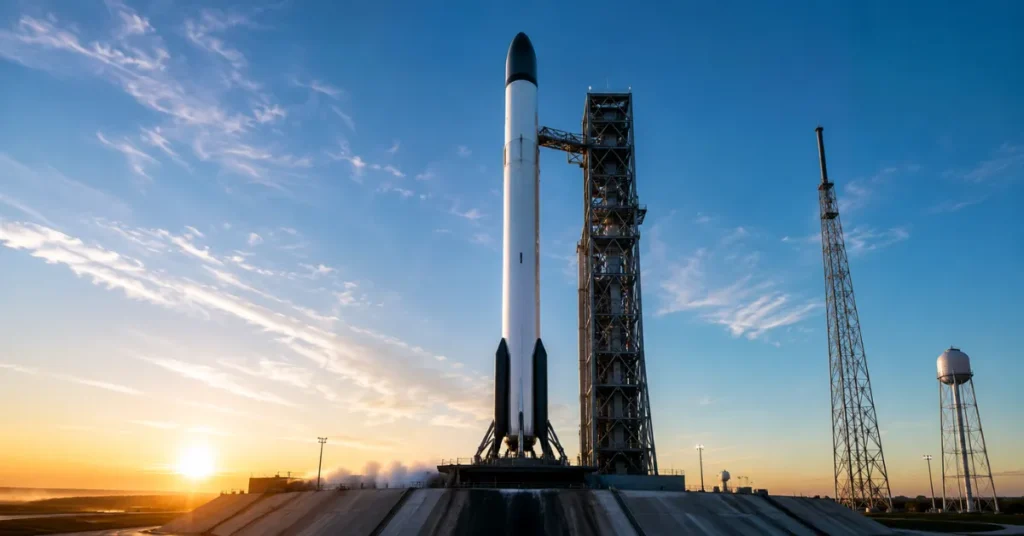
Seattle-area aerospace startup Stoke Space Technologies has raised $510 million in Series D funding as it pushes forward with the development of its fully reusable Nova launch system. The major investment is expected to accelerate the company’s plans to bring its next-generation rocket to its first orbital flight.
The latest funding round was led by Thomas Tull’s US Innovative Technology Fund (USIT) and comes alongside a $100 million debt facility led by Silicon Valley Bank. With the new financing in place, Stoke Space said its total funding has climbed to $990 million, more than doubling the amount of capital it had previously raised.
According to co-founder and CEO Andy Lapsa, the fresh funding provides the company with the resources needed to complete Nova’s development and prepare for its first launch.
“This funding gives us the runway to complete development and demonstrate Nova through its first flights,” Lapsa said in a company announcement.
If development remains on schedule, Nova is expected to make its first launch next year from Launch Complex 14 at Cape Canaveral Space Force Station in Florida.
Founded in 2019, Stoke Space has become one of the fastest-growing aerospace startups in the Seattle region. The company was established by Andy Lapsa and Tom Feldman, both former engineers at Jeff Bezos’ Blue Origin. Feldman currently serves as the company’s Chief Technology Officer.
Unlike many launch providers, Stoke Space is building a fully reusable medium-lift rocket capable of placing 2 to 20 tons of payload into orbit. The company believes full reusability is the key to dramatically reducing launch costs while increasing launch frequency.
Although companies like SpaceX have successfully reused the first-stage boosters of the Falcon 9 and Falcon Heavy, and Blue Origin designed the New Glenn booster for reuse, recovering an orbital rocket’s second stage remains one of the industry’s biggest technical challenges.
That challenge is exactly what Stoke Space hopes to solve with Nova.
The startup has developed a liquid-cooled heat shield, a technology designed to allow the rocket’s second stage to survive re-entry and be reused for future missions. Successfully recovering both stages could significantly reduce the overall cost of reaching orbit.
The company’s ambitious approach has attracted backing from several prominent investors over the years, including Breakthrough Energy Ventures, Industrious Ventures, and Y Combinator.
Commenting on the latest investment, Thomas Tull praised Stoke Space’s long-term vision and its role in strengthening the U.S. space industry.
He said expanding launch capacity is becoming increasingly important for maintaining America’s leadership in both commercial space operations and national security, adding that Stoke’s reusable launch technology directly supports those goals.
Alongside USIT, the Series D funding round included investments from Washington Harbour Partners LP, General Innovation Capital Partners, 776, Breakthrough Energy, Glade Brook Capital, Industrious Ventures, NFX, Sparta Group, Toyota Ventures, and Woven Capital.
The newly raised capital will be used to increase manufacturing capacity for the Nova rocket while completing upgrades to Launch Complex 14, the historic launch site where John Glenn became the first American to orbit Earth in 1962.
Stoke also plans to strengthen its supply chain, expand its Boltline project management software platform, and build the infrastructure required to support frequent rocket launches.
The company currently operates a 168,000-square-foot headquarters in Kent, Washington, located near Blue Origin’s facilities, along with a 75-acre rocket testing site in Moses Lake, Washington.
While competitors such as SpaceX and Blue Origin are concentrating on heavy-lift launch vehicles like Starship and New Glenn, Stoke Space is targeting the growing medium-lift launch market.
Despite not yet reaching orbit, the startup has already secured recognition from the U.S. Space Force, which recently added Stoke Space to its list of approved providers for national security launch missions.
Lapsa said the company designed Nova to address a growing shortage of launch capacity, adding that both government contracts and a strong pipeline of commercial launch agreements demonstrate demand for the rocket.
With nearly $1 billion now raised, Stoke Space is entering a critical stage of development as it works toward launching Nova and bringing fully reusable orbital rockets closer to commercial reality.
Also read : EU Lawmaker Probing Pegasus Spyware Was Hacked, Researchers Say