





India Unveils Billion-Dollar Plan to Boost Smartphone Manufacturing
3 min read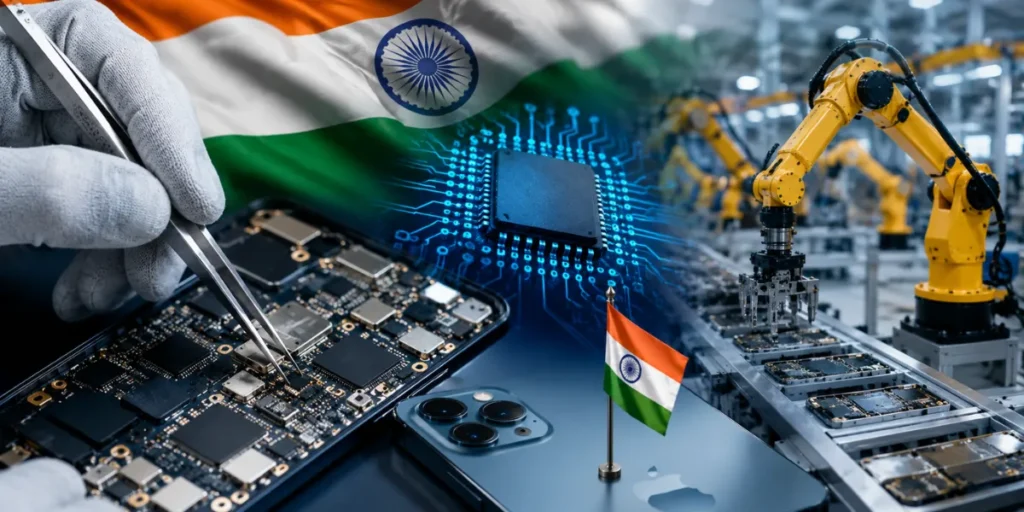
India is stepping up its efforts to become a global electronics manufacturing powerhouse with the launch of a multi-billion-dollar incentive program aimed at expanding smartphone production and strengthening its semiconductor industry. The latest initiative is part of New Delhi’s broader strategy to reduce global dependence on China while attracting more technology companies to manufacture in India.
The Indian government announced the Mobile Phone Manufacturing Scheme, a five-year program worth ₹625 billion (around $6.5 billion). Under the scheme, smartphone manufacturers will receive incentives based on eligible sales, ranging from 2.25% to 5%. Companies that source important components and sub-assemblies within India can also earn an additional 1.5% incentive, encouraging deeper local manufacturing instead of simple product assembly.
Alongside the smartphone initiative, the government committed another ₹1.28 trillion (approximately $13.3 billion) to expand its semiconductor ambitions. The funding builds on India’s $10 billion chip incentive program launched in 2021, with increased support for semiconductor equipment, raw materials, chip design, research, and manufacturing.
India has steadily become a major destination for smartphone production over the past decade. Global brands including Apple, Samsung, Xiaomi, Oppo, and Vivo have expanded their manufacturing operations in the country. Apple, which started assembling iPhones in India in 2017, has significantly increased production through manufacturing partners such as Foxconn and Tata Group. Today, about 25% of Apple’s iPhones are produced in India, reflecting the company’s ongoing effort to diversify its supply chain beyond China.
The country’s manufacturing growth is also extending beyond Apple. Just last week, the Indian government approved a smartphone manufacturing joint venture between China’s Vivo and Dixon Technologies. In another move to improve competitiveness, New Delhi removed import duties on several smartphone and electronics components, helping reduce production costs for companies including Apple and Xiaomi.
Despite this progress, China continues to dominate global smartphone manufacturing. According to Counterpoint Research, China accounted for 63% of worldwide smartphone production in 2025, while India held an 18% share. This highlights both India’s rapid progress and the significant gap it still needs to close.
Industry experts believe the latest policy marks an important shift in India’s manufacturing strategy. Rather than focusing mainly on assembling devices, the government is now encouraging greater investment in research and development, local component production, and higher-value manufacturing.
Navkendar Singh, Associate Vice President at IDC, said India has become highly successful in final smartphone assembly but still relies heavily on imported components. He noted that the expanded incentives could encourage Apple and its suppliers to source more components locally while giving the company greater confidence to shift additional production away from China.
The smartphone manufacturing program will remain in effect until March 2031. During that period, the Indian government expects total mobile phone production to reach approximately ₹39 trillion (around $405 billion) while creating nearly 60,000 direct jobs.
According to Tarun Pathak, Research Director at Counterpoint Research, the five-year initiative could generate long-term benefits for India’s growing component manufacturing ecosystem. As global memory prices continue to rise, smartphone brands are increasingly looking for ways to reduce production costs. Expanding local manufacturing could provide long-term savings, especially as the weakening Indian rupee makes imported components more expensive.
Beyond manufacturing for global brands, India also wants to strengthen its own smartphone industry. During the announcement, IT Minister Ashwini Vaishnaw said the government aims to support the development of Indian smartphone brands. The new scheme includes an additional 3% incentive on eligible sales for companies investing in product design and research focused on creating homegrown mobile brands.
India once had successful domestic smartphone companies such as Micromax, Karbonn, and Lava, but these brands gradually lost market share as Chinese manufacturers including Xiaomi, Vivo, and Oppo rapidly expanded across the country.
Industry leaders believe India’s ambitions extend beyond serving its domestic market. Pankaj Mohindroo, Chairman of the India Cellular and Electronics Association, said the country should target 35% to 40% of global smartphone production in the future. According to him, the new incentives could help build stronger supplier networks, improve engineering capabilities, and deepen India’s role in the global electronics supply chain.
With major investments in both smartphone manufacturing and semiconductor production, India is attempting to create the complete electronics ecosystem needed to compete with China. The country’s success in assembling iPhones has already demonstrated its manufacturing potential. The next challenge will be expanding local suppliers, advanced technologies, and high-value production that can firmly establish India as one of the world’s leading electronics manufacturing hubs.
Also read : Google Images Gets Pinterest-Style AI Discovery Upgrade