




WindBorne Lands $49M U.S. Air Force Deal for Weather Data
4 min read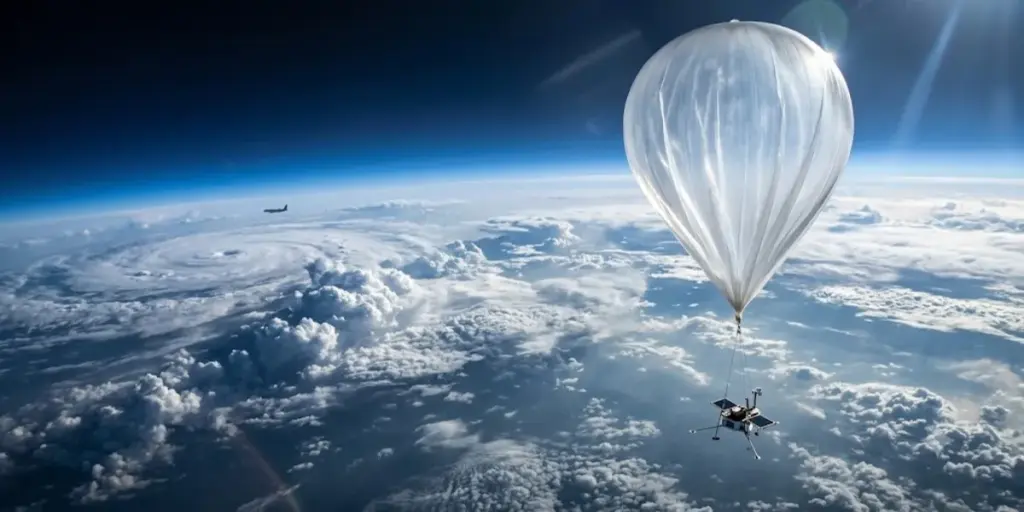
WindBorne Systems has secured a major contract with the U.S. Air Force to supply weather data collected by its fleet of autonomous balloons, giving the startup a potential source of nearly $50 million as it expands its global weather-monitoring network.
The contract is worth up to $49 million, although the Air Force will pay only for the data it actually needs. So far, the military has placed orders worth $1.7 million, with WindBorne executives expecting additional orders in the future.
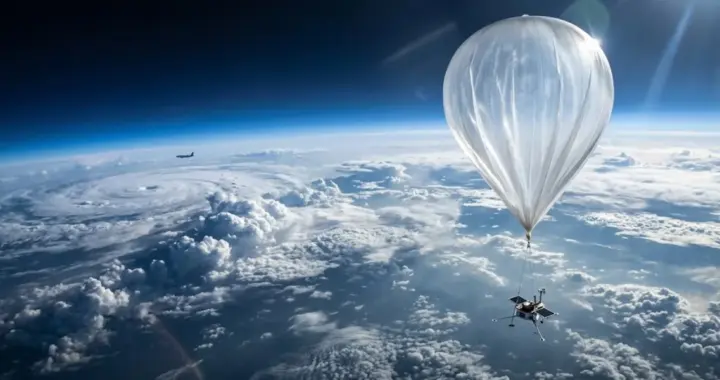
Based in Redwood City, California, WindBorne operates a network of approximately 700 weather balloons that travel around the globe, collecting atmospheric measurements. The company sells this data to customers and also uses it to power its own artificial intelligence weather forecasting system.
Founded in 2015, WindBorne is among the early companies feeding real-world atmospheric measurements directly into a deep-learning weather model, an approach that could help improve how weather forecasts are produced.
A Major Contract to Expand Its Balloon Network
WindBorne has previously worked with several U.S. government organizations, including the National Weather Service, the Air Force and the Navy. However, the new agreement represents the largest contract the company has participated in so far.
The agreement allows the Air Force to request data for specific regions and time periods, depending on its operational requirements. Rather than receiving a fixed amount upfront, WindBorne earns revenue as the military places orders.
“This is largely a vehicle through which continued growth of the constellation can be supported, as well as some work on research and development to continue to improve the hardware and performance of the balloons,” WindBorne co-founder and CTO Andrey Sushko told TechCrunch.
Sushko also said the government awarded the contract without competitive bidding. According to him, the decision reflected the government’s determination that WindBorne was the only company capable of providing the required global data collection service in a way that met its operational needs.
The funding could help WindBorne expand its balloon network while improving the technology behind its weather-monitoring systems.
AI Is Changing How Weather Forecasts Work
The deal comes as artificial intelligence becomes an increasingly important part of weather forecasting.
For decades, meteorologists have depended on traditional forecasting systems that use powerful supercomputers to solve complex mathematical equations representing how the atmosphere behaves. These systems require substantial computing resources to simulate weather conditions and predict how they might change.
AI-powered forecasting models offer a different approach. By learning from decades of historical weather data, these systems can generate predictions more quickly without relying entirely on traditional physics-based simulations.
The rise of transformer model architectures and the European Centre for Medium-Range Weather Forecasts’ release of a large weather dataset several years ago helped accelerate progress in this area.
Today, AI weather models developed by leading technology companies and government agencies are demonstrating improved forecasting capabilities. However, neither AI nor traditional forecasting methods can handle every situation equally well, making both approaches important for understanding changing weather conditions.
Google DeepMind’s latest weather model has introduced additional capabilities, while its cyclone forecasting tools are becoming increasingly important to the U.S. government’s hurricane response efforts.
WeatherMesh 6 Targets More Accurate Predictions
WindBorne is also developing its own AI forecasting technology. Earlier this summer, the company introduced WeatherMesh 6, the latest version of its weather prediction model.
WindBorne says WeatherMesh 6 delivers more accurate forecasts than the traditional model operated by the European Centre for Medium-Range Weather Forecasts, which simulates atmospheric behavior using the laws of physics.
The company’s strategy combines AI forecasting with real-world measurements collected by its balloons. Those observations provide atmospheric data that can support forecasting and help the company navigate its fleet through changing weather conditions.
WindBorne CEO John Dean told TechCrunch in August that the startup had raised a $37 million Series B funding round to continue scaling the business.
Balloons Navigate Into a Typhoon’s Eye
WindBorne demonstrated another application of its technology in August, when it became the first organization to send an unpowered flight system into the eye of a typhoon to collect data.
Unlike conventional aircraft, the company’s balloons do not rely on engines to move from one location to another. Instead, they navigate by adjusting their altitude, releasing air or dropping sand carried as ballast. These changes allow the balloons to enter different wind patterns and travel toward their intended destinations.
The approach depends on both accurate weather models and a sufficiently large balloon network. With enough balloons deployed across different locations, the company has a better chance of having vehicles positioned where important weather measurements are needed.
Sushko described the achievement as a significant step because it involved using a deep-learning model to guide real-world operational decisions.
He explained that the system depends on two main capabilities: understanding wind and weather patterns well enough to navigate them, and maintaining a large enough fleet to ensure balloons are available in the right places.
The Air Force contract, WindBorne’s growing balloon network and its investment in AI forecasting all point toward the company’s broader goal of collecting more atmospheric data and using it to improve weather predictions.
As demand for faster and more useful forecasting continues to grow, WindBorne is positioning its autonomous balloon technology as a way to connect real-world observations with AI-driven weather intelligence.
Also read : TechCrunch Disrupt 2026: How Startups Can Win Their First 1,000 Customers