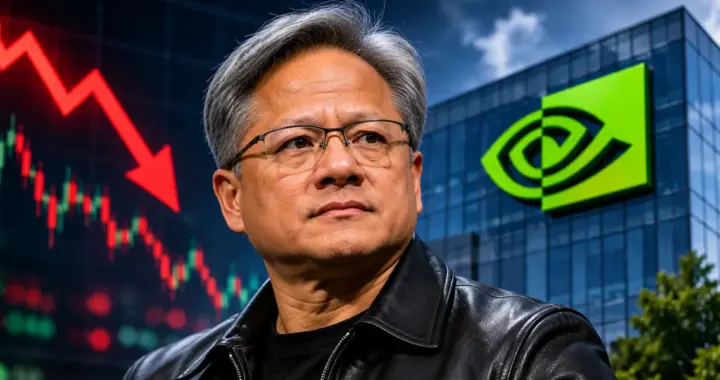





Nvidia Governance Crisis Puts Jensen Huang Under Scrutiny
5 min read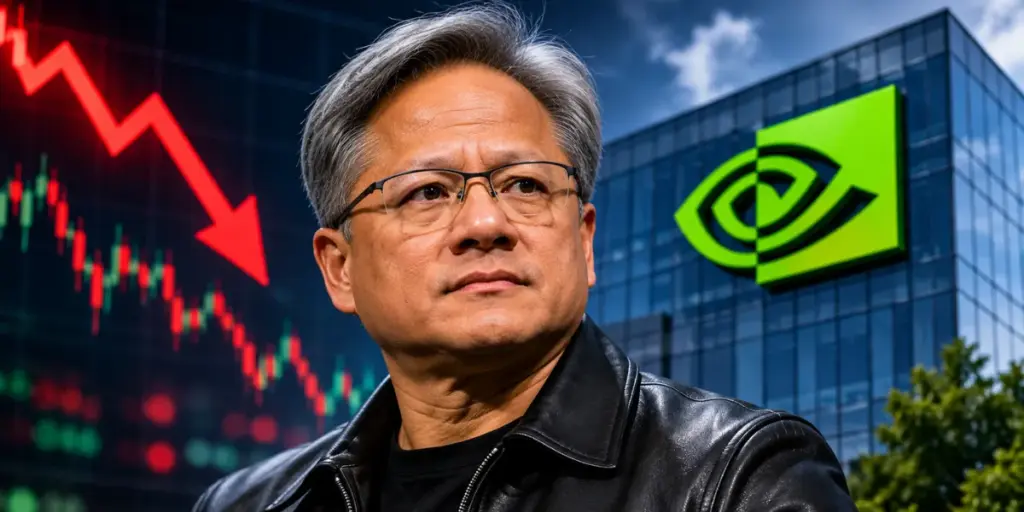
Nvidia is facing growing questions about its corporate leadership and board oversight after reports involving CEO Jensen Huang triggered investor concerns and renewed attention to the company’s governance practices.
Nvidia shares fell 5.47% on Tuesday after dropping another 4% on Monday, marking a roughly 9.5% decline over two trading sessions. The market reaction came despite limited new company announcements. One significant development was the board’s decision to hire law firm Wachtell, Lipton, Rosen & Katz to conduct an internal investigation.
The controversy centers on reports that Huang had an extramarital relationship with Alice Huang, whom U.S. intelligence agencies reportedly suspect of spying for China. The allegations have raised questions about potential national security risks, corporate disclosure obligations, and the responsibilities of Nvidia’s board.
However, Nvidia said in a Sunday statement that it had “no reason to believe that either national security or NVIDIA secrets were compromised.”
Corporate Governance Experts See an Unusual Situation
Corporate governance specialists say the situation presents an unusual challenge for Nvidia because it combines personal misconduct allegations with potential national security concerns.
Ann Lipton, a corporate governance professor at the University of Colorado, said previous corporate scandals have involved affairs and sexual harassment allegations. However, she noted that she was unaware of a comparable case involving a CEO and a suspected intelligence operation.
Todd Henderson, a professor at the University of Chicago whose research covers corporate law and securities regulation, said the investigation will depend heavily on what Huang knew about Alice Huang and when he learned about the allegations surrounding her.
The distinction could be important. Information about Nvidia’s semiconductor manufacturing facilities or chip designs could raise serious national security concerns. Ordinary corporate information, however, may have different legal implications.
Both experts said the investigation’s independence and scope will be important in determining what happens next.
What Will Nvidia’s Internal Investigation Examine?
According to Lipton, the investigation should focus on three major questions.
First, did any laws get broken? Second, did Huang violate Nvidia’s internal policies? Third, did he provide the board with complete and accurate information about the relationship and its potential implications?
The timing of Huang’s knowledge could become particularly important. A report from Wired said Huang hired a public relations crisis management firm known for handling sexual scandal cases approximately a year ago.
That decision could have been related to the alleged affair itself. However, it also raises questions about whether Huang knew about the suspected intelligence connections at that time.
Henderson described two possible scenarios. In one, Huang hired the PR firm because he wanted to manage the reputational consequences of an extramarital relationship without knowing the woman’s alleged connections. In another, he already knew she was suspected of being a Chinese spy.
Henderson said the second situation would be significantly more concerning from a board oversight perspective, particularly given Nvidia’s access to sensitive technology.
Potential Shareholder Lawsuits Add Pressure
The controversy could also expose Nvidia to shareholder litigation.
Lipton identified two possible legal routes: securities fraud claims and shareholder derivative lawsuits alleging corporate mismanagement.
A proposed class-action lawsuit has already been filed against Nvidia and Huang. It alleges that the company and its CEO misled investors by concealing Huang’s relationship with Alice Huang while describing business dealings with her former employer as routine.
Lipton explained that securities fraud claims generally focus on whether investors were misled through false statements or omissions.
She emphasized that personal relationships alone do not automatically create a securities law violation. The central issue is whether relevant information was concealed or investors were given misleading disclosures.
A corporate mismanagement claim under Delaware law, where Nvidia is incorporated, would be more difficult to establish.
Shareholders typically cannot sue company executives simply because they believe management made poor decisions. To bring a derivative lawsuit on behalf of the company, they generally need to demonstrate that the board cannot independently address the alleged misconduct.
That can involve showing that directors are personally implicated or too closely connected to the CEO to act independently.
Questions About Nvidia’s Board and Succession Planning
Nvidia’s 10-member board has historically maintained a close relationship with Huang, according to reporting by The New York Times.
That relationship could attract additional attention during the investigation. However, the decision to appoint independent directors and outside legal counsel could make it more difficult for shareholders to argue that the board is incapable of handling the situation.
Lipton also pointed to broader governance concerns, including Nvidia’s leadership structure and succession planning.
Huang reportedly has more than 60 direct reports, reflecting the company’s famously flat organizational structure. Lipton described the apparent lack of a succession plan as a potential danger for any major business.
Family involvement in the company is another issue attracting attention.
Huang’s son, Spencer, works as a director of product management, while his daughter, Madison, serves as a senior director of product marketing. His son-in-law, Nico Caprez, also works in business development.
Some employees reportedly believe Huang could be preparing family members for future leadership positions. When Bloomberg asked whether Madison could eventually take over, Huang did not completely dismiss the possibility, instead saying it was not something he would wish upon her.
Lipton described hiring family members as poor corporate governance practice, while Henderson said he strongly opposes nepotism, particularly when it comes to succession at publicly traded companies.
Nvidia’s Ownership Structure Could Matter
One factor that may give Nvidia’s board more flexibility is the company’s share structure.
Unlike some major technology companies, Nvidia does not have dual-class shares that give founders disproportionate voting power.
Huang reportedly owns approximately 3.6% of Nvidia, meaning he does not have complete control over shareholder voting decisions.
Lipton noted that this structure could make it easier for the board and shareholders to challenge his leadership if circumstances require it.
Ultimately, neither Lipton nor Henderson suggested that Huang’s position is certain to change. Much will depend on the investigation’s findings, the information available to the board, and whether any legal or internal policy violations are established.
For Nvidia, the situation goes beyond a temporary stock decline. It has brought renewed attention to leadership accountability, board independence, family involvement, and succession planning at one of the world’s most important technology companies.
Also read : Drops Music App Brings Social Music Discovery Back to Life