





OpenAI Eyes AI-First Phone to Replace Apps
2 min read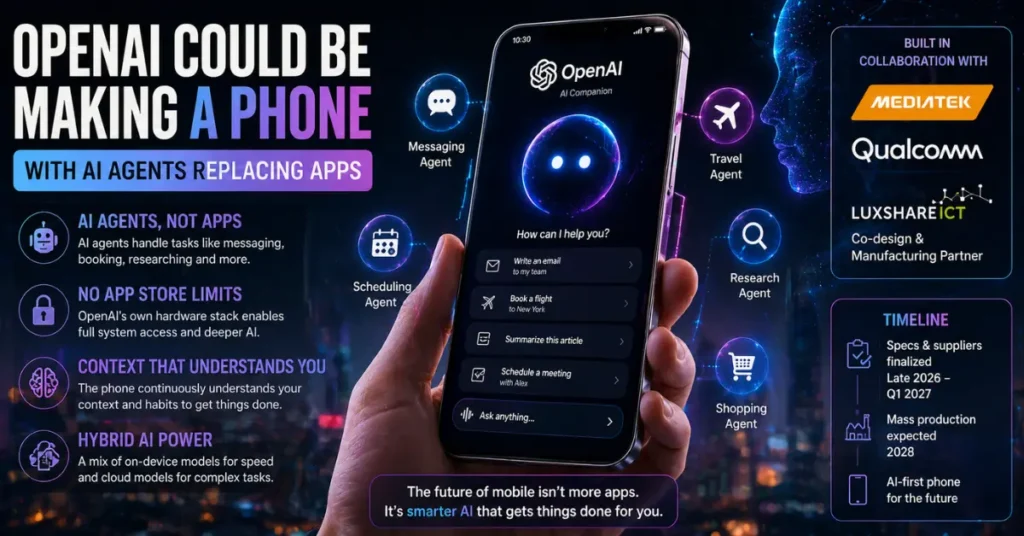
Rumors around OpenAI’s hardware ambitions are heating up again—this time with talk of a smartphone that could rethink how we use apps altogether. According to industry analyst Ming-Chi Kuo, the company may be exploring a new kind of AI-powered phone in collaboration with major chipmakers and manufacturing partners.
A Phone Built for AI, Not Apps
Kuo suggests that OpenAI could team up with MediaTek and Qualcomm to develop a custom smartphone chip, while Luxshare could help design and produce the device.
But what makes this phone stand out isn’t just the hardware—it’s the software philosophy. Instead of relying on traditional apps like those found on Apple or Google platforms, the device could use AI agents to handle everyday tasks. From messaging to booking services, these agents would act on behalf of the user, potentially eliminating the need to open separate apps.
Breaking Free From App Store Limits
Today’s mobile ecosystems are tightly controlled by Apple and Google, which decide how apps function and what level of system access they get. By building its own hardware and software stack, OpenAI could bypass these restrictions and allow deeper AI integration across the device.
With ChatGPT already approaching a billion weekly users, moving into hardware could be a natural next step. A dedicated device would give OpenAI more direct interaction with users—and potentially unlock new features that aren’t possible within existing app ecosystems.
A Broader Industry Shift
OpenAI isn’t alone in thinking about a post-app future. At SXSW, Carl Pei, CEO of Nothing, predicted that apps could eventually disappear altogether, replaced by more intelligent and context-aware systems.
Kuo echoes this idea, noting that OpenAI’s device could continuously understand user behavior and context. By combining on-device AI models with cloud-based processing, the phone could deliver faster responses while handling more complex tasks efficiently.
Timeline and What’s Next
According to Kuo, key specifications and supplier decisions for the device could be finalized by late 2026 or early 2027. If everything goes as planned, mass production might begin in 2028.
Interestingly, earlier reports pointed to a different first step. OpenAI’s Chief Global Affairs Officer, Chris Lehane, previously indicated that the company’s first hardware product could launch in the second half of 2026—possibly in the form of uniquely designed AI-powered earbuds.
For now, OpenAI hasn’t officially confirmed these plans. But if the rumors are accurate, the company may be preparing to challenge not just smartphones—but the entire app-driven digital experience.
Also read : Spy Firms Exploit Telecom Flaws to Track Phone Locations