




Lime Raises $167M in IPO as Shares Debut on Nasdaq
3 min read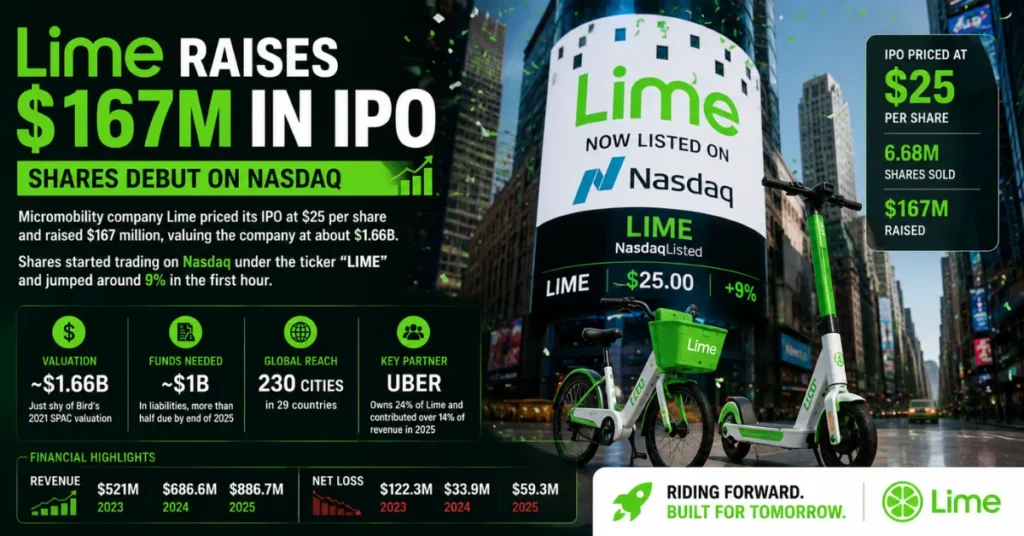
Micromobility company Lime has officially entered the public market, raising $167 million through its long-awaited initial public offering (IPO). The move marks a major milestone for the scooter and bike-sharing company after years of preparing for a public debut.
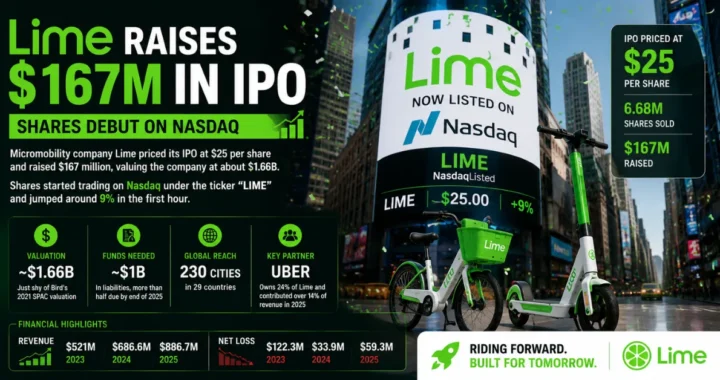
Lime priced its IPO at $25 per share, right in the middle of its expected range of $24 to $26. The company sold 6.68 million shares, with its stock beginning to trade on the Nasdaq under the ticker symbol “LIME” on Wednesday afternoon. Investor interest appeared strong, with shares climbing around 9% during the first hour of trading.
A Public Listing Years in the Making
Lime has been discussing plans to go public for several years.
Following a $523 million funding round in 2021, CEO Wayne Ting told TechCrunch that the company hoped to launch an IPO in 2022. While those plans were delayed, Ting reiterated in 2023 that Lime was waiting for more favorable market conditions before moving ahead.
With the successful IPO now complete, Lime has secured a market valuation of approximately $1.66 billion. That figure comes close to the valuation achieved by fellow micromobility company Bird, which entered the public market through a special purpose acquisition company (SPAC) merger in 2021.
Fresh Capital Comes at a Critical Time
The IPO proceeds arrive at an important moment for Lime’s financial position.
In documents filed ahead of its public offering in May, the company acknowledged there was “substantial doubt” about its ability to continue operating as a going concern without additional financing.
Lime disclosed that it needs the newly raised capital to help cover roughly $1 billion in liabilities, with more than half of those obligations becoming due before the end of the year. The company also warned investors that, without the IPO, it would have needed to secure alternative funding sources.
Micromobility Industry Faces Ongoing Challenges
Lime’s public debut comes despite continued challenges across the micromobility industry.
Several competitors have struggled in recent years. Bird filed for bankruptcy protection and later restructured after going public. Other companies have also faced significant setbacks, including mergers such as Tier and Dott, stock exchange delistings involving Micromobility.com, and business closures like Superpedestrian.
The industry’s difficulties have highlighted the challenges of building sustainable scooter and bike-sharing businesses despite growing urban demand for alternative transportation.
Revenue Growth Continues Despite Losses
Even with industry headwinds, Lime has steadily expanded its business over the past few years.
The company reported revenue of $521 million in 2023, which increased to $686.6 million in 2024 before reaching $886.7 million in 2025.
Lime also made progress in reducing its losses. Net losses declined from $122.3 million in 2023 to $33.9 million in 2024, although losses increased slightly to $59.3 million in 2025.
The company’s growth has been supported by its expanding international presence. Lime now operates across 230 cities in 29 countries, making it one of the largest micromobility providers worldwide.
Uber Remains a Key Partner
Another important factor behind Lime’s business is its relationship with Uber.
The ride-hailing giant owns approximately 24% of Lime and contributed more than 14% of the company’s total revenue last year. In many cities, Uber users can book Lime scooters and bikes directly through the Uber app, helping expand Lime’s customer reach.
With fresh funding, an improving financial profile, and a successful Nasdaq debut, Lime is entering its next chapter as a publicly traded company. Investors will now be watching closely to see whether the micromobility leader can maintain its revenue growth while navigating a competitive and financially demanding industry.
Also read : AI Job Loss Fears Face New Challenge as Fresh Report Shows Hiring Growth