




Uber and Zipline Team Up to Bring 5-Minute Eats Deliveries
3 min read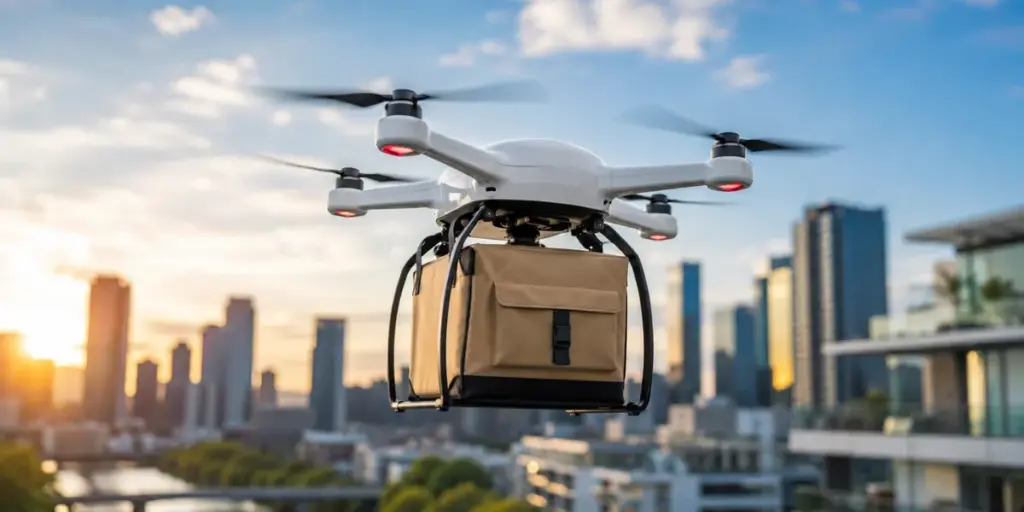
drone company, to expand the reach of Uber Eats across the United States.
The companies announced on Monday that Zipline’s drones will begin delivering Uber Eats orders by the end of this year. The rollout will start in areas where Zipline already operates, with plans to expand into dozens of U.S. cities over time.
As part of the partnership, Uber is also investing in Zipline, although neither company revealed the size of the investment.
Uber’s Big Goal: One Million Drone Deliveries a Day
Uber has set an ambitious target. The company wants Zipline’s drones to help reach one million deliveries per day by the end of 2029, marking one of its biggest bets yet on automated delivery technology.
Instead of building every technology in-house, Uber has increasingly focused on partnering with specialized companies. It has followed a similar strategy in the autonomous vehicle industry by bringing multiple providers onto its platform rather than relying on a single solution.
That approach has allowed Uber to stay competitive even after selling businesses such as Uber Elevate, its former aerial ride-sharing project, and Uber Autonomous Technologies Group, which worked on self-driving vehicles.
Over the years, Uber has backed this strategy with major investments, committing more than $10 billion to dozens of autonomous vehicle companies.
Drone Delivery Becomes a Bigger Focus
Uber has experimented with drone deliveries before. While its Elevate division explored the concept years ago, the company renewed its interest in late 2025 through a partnership with Israeli drone startup Flytrex, which also included a smaller investment.
Now, Uber believes Zipline can take the idea much further.
According to the company, Zipline’s drones could deliver Uber Eats orders in as little as five to ten minutes, making deliveries significantly faster than traditional methods for many short-distance orders.
Uber CEO Dara Khosrowshahi told The Wall Street Journal that ultra-fast delivery could become an even larger opportunity than the original food delivery business.
“Truly quick commerce is proving to be an even bigger market than the original food market was,” Khosrowshahi said. “We think this can be an enormous tailwind for the next leg of growth for Eats.”
Challenges Remain in the Autonomous Race
Uber’s partnership-first strategy has not been without obstacles.
The company recently ran into tensions with Waymo, one of its highest-profile autonomous vehicle partners. Their partnership is now expected to end when existing agreements expire in 2028, and the two companies are also on opposite sides of an ongoing debate over autonomous vehicle regulations.
Despite those challenges, Uber continues expanding its network of technology partners rather than slowing its investments in autonomous transportation.
Zipline’s Growth Continues
Zipline has been growing rapidly as demand for drone logistics increases.
The company recently completed an extended Series H funding round, raising $800 million and increasing its valuation to $7.6 billion.
Zipline co-founder Keller Cliffton said the partnership with Uber represents another step toward making instant delivery a reality for more people.
“Every great transportation revolution has changed where people live, how businesses operate, and how economies grow,” Cliffton said. “Together with Uber, we’re taking the next step toward building a world where getting what you need is as fast and effortless as sending a text, no matter where you are.”
If the rollout succeeds, Uber Eats customers in more U.S. cities could soon receive food and other orders from drones within minutes, potentially reshaping the future of everyday deliveries.
Also read : Tether Evo Advances Brain-Computer Interface Research