




Anthro Energy Breaks Ground on U.S. Battery Materials Factory
4 min read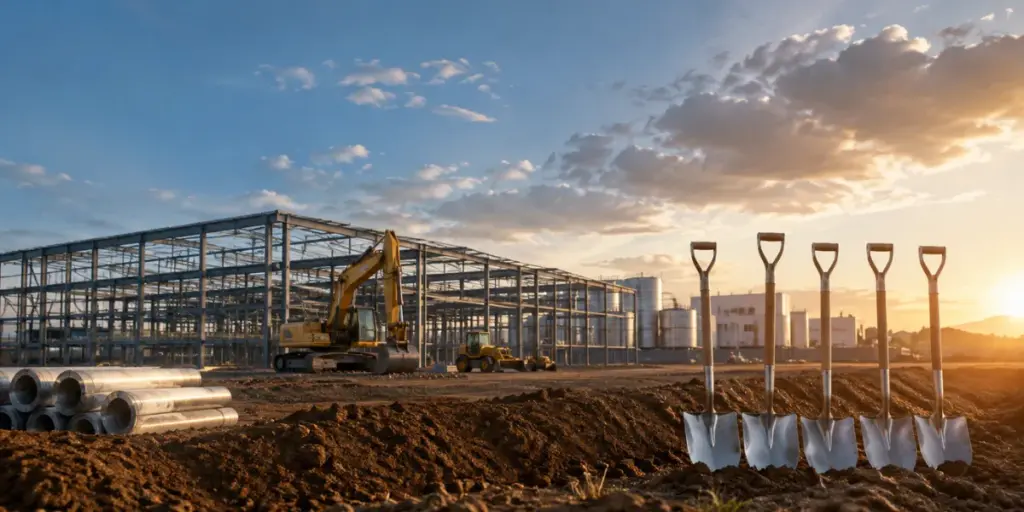
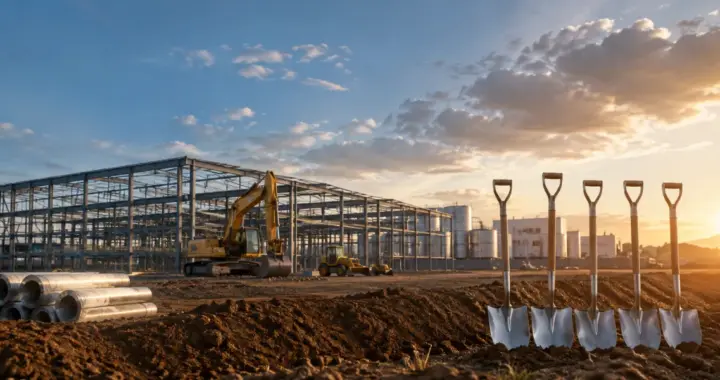
Anthro Energy has started construction on a new battery materials factory in Louisville, Kentucky, in a move that could strengthen the U.S. battery supply chain and help advance solid-state battery technology.
The company broke ground on the facility Tuesday. Once operational, the factory is expected to produce enough battery materials to support more than 300,000 electric vehicles. Its planned annual output is 25 gigawatt-hours of electrolytes.
But Anthro Energy sees the project as more than a large-scale manufacturing facility. The startup believes the factory could become an important part of the growing U.S. ecosystem for solid-state and semi-solid-state batteries, particularly as manufacturers look for battery materials that do not depend on Chinese suppliers.
The company expects the Louisville facility to begin production in 2028.
“When it opens, we’ll be serving domestic, high-spec customers, this emerging ecosystem for battery production where they frankly just needs electrolytes — a domestic source of China-free supply, FEOC-free supply,” David Mackanic, Anthro Energy’s co-founder and CEO, told TechCrunch.
Building a U.S. battery supply chain
Battery manufacturers in the U.S. are increasingly searching for materials that avoid “foreign entity of concern,” or FEOC, restrictions. The rules are designed in part to reduce dependence on companies connected to China.
Anthro hopes its Kentucky factory will provide a domestic source of battery electrolytes for companies building out U.S.-based production.
The location is also strategically important. Mackanic said that within a 12-hour drive, customers can reach around 70% of the battery production facilities currently operating in the United States.
Anthro Energy, which raised its first funding round four years ago, received significant government support to build the new facility. The Department of Energy awarded the company $24.9 million through the Bipartisan Infrastructure Law, while another $18.4 million came through investment tax credits under the Inflation Reduction Act.
Kentucky also provided $2.3 million in tax incentives tied to the creation of 110 permanent jobs.
The factory will initially be capable of producing a range of electrolytes. Over time, however, Mackanic wants more of its production capacity to be dedicated to Anthro’s own polymer material, Proteus.
A potential path to solid-state batteries
Proteus is designed to work with existing battery manufacturing processes with minimal changes. That could allow Anthro to begin production using formulations developed by other companies before eventually shifting more capacity toward its own material once customers validate it.
The technology could become particularly important for solid-state batteries, which have long been viewed as one of the industry’s most promising next steps.
Unlike conventional lithium-ion batteries, solid-state batteries replace flammable liquid electrolytes with solid materials. This can potentially increase energy density while lowering the risk of fires.
Solid-state designs can also help prevent dendrites — tiny, needle-like structures that can grow between a battery’s anode and cathode and create a short circuit.
Despite these advantages, commercializing solid-state batteries at scale has remained difficult. Manufacturers still face major challenges in producing cells that are durable, reliable and cost-effective enough for mass-market applications.
Chinese battery companies are reportedly targeting trial production of solid-state batteries in 2027, adding pressure on U.S. companies to develop competitive domestic technologies.
Anthro’s different approach
Anthro says its manufacturing process could address some of the challenges associated with solid-state batteries.
Instead of starting with a solid electrolyte, Anthro’s material initially flows into the battery cell as a liquid. This allows it to move through the anode and cathode in a way similar to conventional liquid electrolytes.
The material then hardens inside the cell, effectively binding the two components together.
According to Mackanic, depending on the formulation, the resulting battery cell can be significantly stronger than one using a conventional liquid electrolyte — potentially by 10 to 15 times. The cells can also retain flexibility.
Those characteristics could eventually make the technology useful beyond electric vehicles. Anthro sees potential applications in areas such as drones and robots, where lighter, stronger and more flexible batteries could be particularly valuable.
Scaling battery technology from laboratory or small production runs to mass manufacturing has historically been a major challenge for startups. Many battery materials companies have struggled when making that transition.
Mackanic believes federal support can help Anthro avoid that so-called “valley of death” and move its technology into larger commercial applications.
“To get into big applications, you have to have big production,” he said. “The Department of Energy award solves a lot of the chicken or the egg problem.”
With construction now underway, Anthro is betting that a large domestic supply of advanced electrolytes can help both its own technology and the broader U.S. push toward next-generation batteries.
Also read : Wispr Raises $280M at $2B Valuation as AI Dictation Expands