




Ex-Meta Researchers Launch AI Model for Industrial Robots
3 min read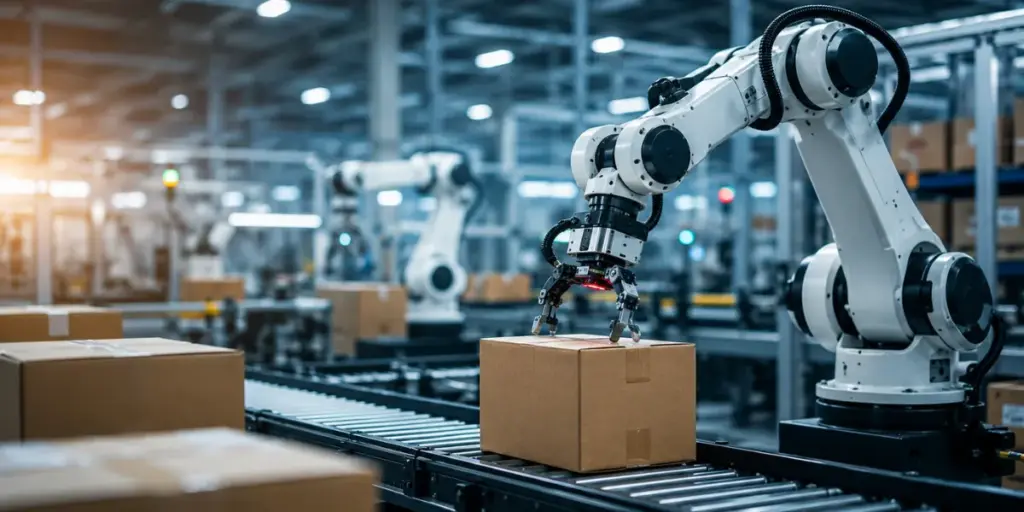
Artificial intelligence has already transformed software, search, and digital services. Now, a growing group of startups is working to bring AI into the physical world, where machines need to understand and respond to their surroundings.
Perceptron, a startup founded by two former Meta AI researchers, is taking that approach to factories and warehouses. The company, founded in November 2024, is developing vision models designed to help machines better understand physical environments and perform tasks in them.
This week, Perceptron introduced Isaac 0.5, its latest AI model. The company says the system is built to help machines “perceive, reason and act” in industrial environments, particularly settings such as factory floors and warehouses.
The model can support vision-guided robots as they move through complicated environments and carry out physical tasks. It can also help companies extract useful visual information from videos captured by those robots.
One notable part of the launch is that Isaac 0.5 is being released as an open-weight model. That means its parameters and training materials can be inspected by others, giving researchers and developers an opportunity to examine how the system works.
A Different Approach to Physical AI
Perceptron was co-founded by Armen Aghajanyan and Akshat Shrivastava, both of whom previously worked at Meta’s Fundamental AI Research (FAIR) division.
The startup recently raised $21 million in a funding round led by Bessemer Venture Partners. The founders believe their technology could become an important software layer for industrial automation.
Perceptron argues that companies currently face a difficult choice when building physical AI systems. They can use large general-purpose models that require multiple dedicated cloud GPUs for each instance, or choose narrower systems designed to handle individual capabilities such as perception or control.
The company wants Isaac 0.5 to take a more flexible approach.
Rather than designing the model around one repetitive task, Perceptron says its system is general-purpose and can adapt to different environments and situations.
Teaching Robots to Handle Real-World Tasks
A seemingly simple warehouse job can actually involve many separate decisions.
Consider a robot tasked with sorting packages. As Shrivastava explained, the machine would need to read a package label, understand where different boxes are located, decide which box to pick up, and determine the order in which multiple boxes should be handled.
Perceptron’s software is intended to help robots navigate these individual steps as part of a broader process.
The company isn’t claiming that existing industrial software cannot perform these tasks. Many systems already handle individual jobs. The difference, according to Perceptron, is that Isaac 0.5 is designed to perform them more flexibly rather than being locked into one specific workflow.
Training AI With Huge Amounts of Video
Teaching an AI system to understand physical environments requires enormous amounts of visual data.
Perceptron says Isaac 0.5 was trained using one million hours of general video, helping the model learn to recognize different environments, visual elements and situations.
The company also uses ego video, which is footage recorded from the perspective of a person performing a physical task. Such videos are commonly captured using devices such as GoPro cameras or wearable cameras.
Another source is UMI video, which can be used to teach AI systems physical movements by recording repetitive actions performed by humans.
Perceptron has not disclosed where its training videos came from. However, Shrivastava said the company has built petabyte-scale internal datasets covering multiple types of information, including images, text, video and robotic trajectories.
From Warehouses to Other Industries
The potential applications for AI-powered robots extend well beyond package sorting.
Perceptron plans to make its software available to a range of vendors, which could allow its AI technology to become part of robotic systems used across multiple industries.
The company is targeting sectors including:
- Manufacturing
- Logistics
- Warehousing
- Security
- Mobility
- Media and entertainment
The broader goal is to create an intelligence layer that can help machines understand what is happening around them and respond appropriately.
That could become increasingly important as companies look to automate more physical operations while dealing with complex environments that cannot always be reduced to a fixed set of instructions.
For Perceptron, Isaac 0.5 represents a step toward that vision. The founders believe flexible visual AI could help bridge the gap between today’s software-focused AI systems and machines capable of operating more independently in the real world.
“Nothing like this really exists out there,” Aghajanyan said, adding that the company is excited about the technology.
Also read : General Motors EV Brake Problems Face Tougher Federal Investigation