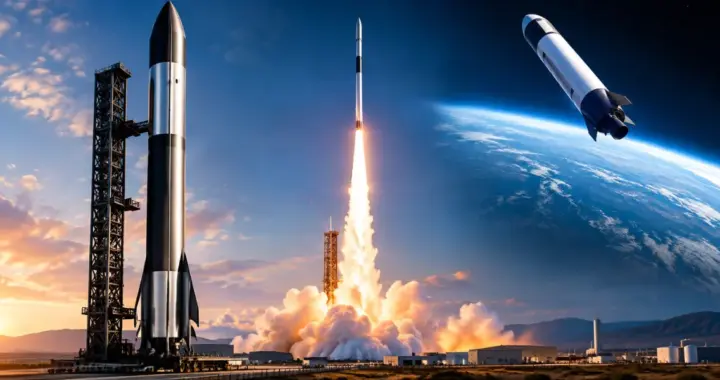





Stoke Space Raises $1B to Take on SpaceX
3 min read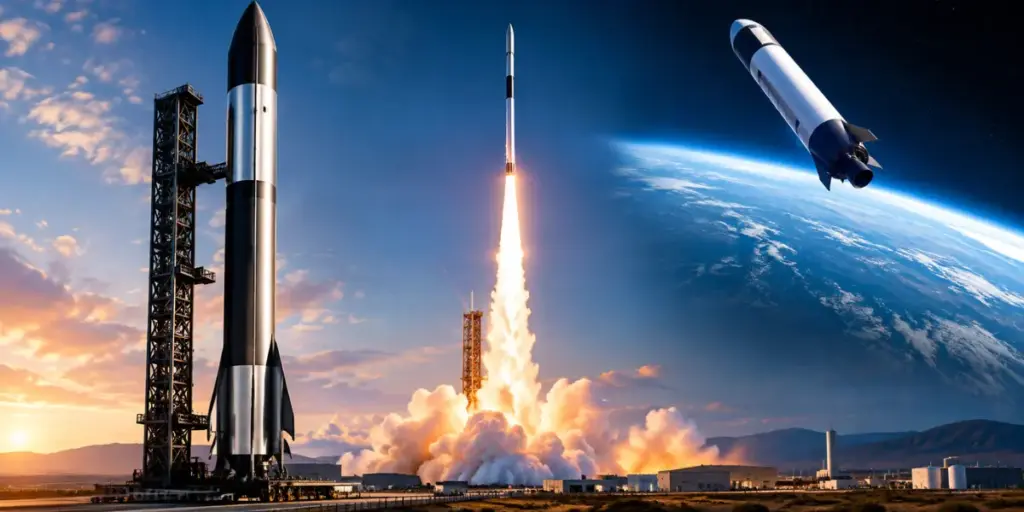
Stoke Space Technologies is putting serious money behind its ambition to build fully reusable rockets. The company has completed the initial closing of a $1 billion Series E funding round, giving the startup fresh capital to reach orbit, expand production and begin developing a much larger rocket.
The latest funding brings Stoke’s total capital raised to $2.3 billion.
“This round is really to scale,” Stoke CEO Andy Lapsa told TechCrunch. The funding, he said, will help the company build infrastructure, increase production and flight frequency, and finance development of its next-generation vehicle.
The Series E round was led by Point72 Ventures, the technology investment arm of hedge fund billionaire Steve Cohen, and Spark Capital. Other investors include General Innovation, Glade Brook Capital, US Innovation Technology, Washington Harbour Partners, Woven Capital and Y Combinator, among others.
Stoke is part of a growing group of private rocket companies trying to challenge SpaceX in the launch market. While companies such as Rocket Lab, Relativity Space and Firefly Aerospace are developing reusable technologies, Stoke is pursuing a more ambitious goal: making both stages of a rocket reusable.
That means the first-stage booster and the second stage that carries the payload would both return to Earth and fly again. No rocket has achieved that capability yet.
SpaceX has already demonstrated reusable first-stage boosters with Falcon 9 and is working toward a fully reusable system with Starship. But developing a rocket that can survive atmospheric reentry remains one of the industry’s biggest technical challenges.
One particularly difficult problem is protecting the second stage from the extreme heat generated during reentry. Stoke has taken a different approach. Its vehicle uses super-cooled liquid hydrogen flowing through the thermal shielding to actively cool the surface.
Lapsa said the system has undergone extensive ground testing and will be used during the rocket’s first flight. The company also plans to take a conservative approach initially by flowing more coolant than it expects to need, effectively overcooling the vehicle’s surface.
Stoke expects its first rocket, called the Nova Pathfinder, to launch in early 2027. The company has already completed structural and operational tests on the first stage at its Moses Lake facility. The next major step is to conduct ground test-firings of each stage before bringing the rocket and launch infrastructure together.
The Pathfinder is designed to carry three metric tons to low-Earth orbit. If it launches as planned, Stoke believes it will be the largest debut vehicle introduced by any U.S. rocket maker.
The company has already sold launch contracts for the vehicle and says it has multiple Pathfinder rockets in production. Lapsa said Stoke remains confident that the vehicle will reach the market and orbit regardless of the latest funding round.
But Stoke isn’t stopping with Pathfinder.
A Bigger Rocket Is Already in Development
The company also revealed plans for Nova Block 2, a significantly larger rocket that has been under development for several years.
Nova Block 2 will use many of the same technologies developed for Pathfinder, including Stoke’s engines and its active cooling heat shield. The larger vehicle is expected to carry 15 metric tons to low-Earth orbit, slightly more than SpaceX’s Falcon 9.
Stoke is targeting 2029 for deployment of Nova Block 2. That timing could put the company in an interesting position if SpaceX follows through on Elon Musk’s expectation that Falcon 9 will be phased out around then.
For Stoke, the bigger issue is not simply replacing Falcon 9. Lapsa argues that the space industry can grow only as quickly as launch providers can put rockets into the sky, particularly when those rockets serve outside customers.
The arrival of Starship could also create an unusual dynamic. Companies and government agencies seeking launches may have to compete with SpaceX’s own projects for access to the massive rocket. Stoke, by comparison, has not announced plans to operate its own space assets.
For satellite companies and other potential customers, that could make additional independent launch providers increasingly important.
“Now is the time to get moving,” Lapsa said, arguing that the industry needs more launch capacity to begin deploying the satellite constellations and other space applications that have remained on the ground.
With $1 billion in fresh funding, Stoke now has significantly more fuel to turn that ambition into reality.
Also read : Apple’s Foldable iPhone Could Finally Arrive This Week