


inDrive Plans 2027 Robotaxi Tests in Kazakhstan With Pony.ai
5 min read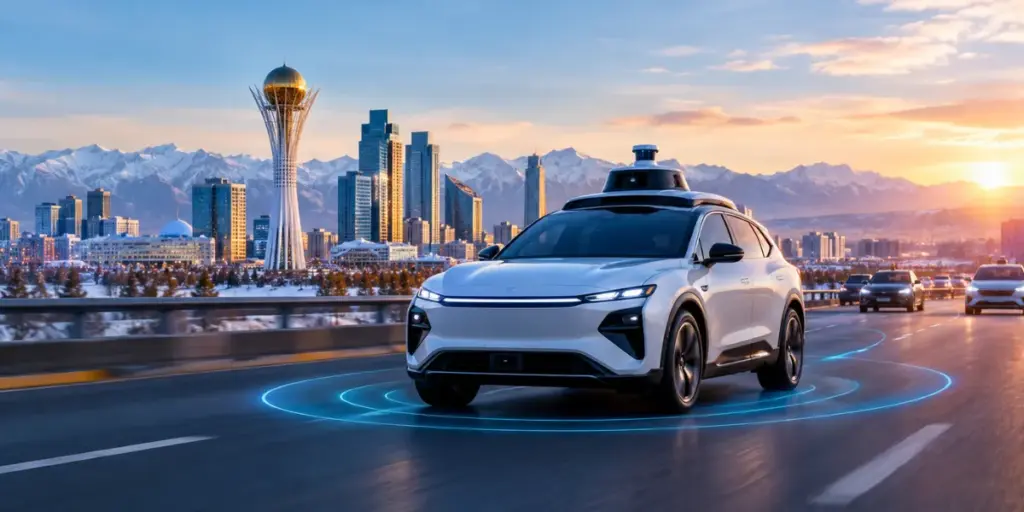
Ride-hailing company inDrive is preparing to test autonomous taxis in Kazakhstan in 2027, partnering with Chinese self-driving technology company Pony.ai and Nvidia as it explores the future of driverless transportation.
The planned trials will begin in Astana, Kazakhstan’s capital, during the first half of 2027. Initially, the vehicles will operate with a safety operator on board, with the longer-term goal of offering fully driverless rides.
The announcement follows a memorandum of understanding signed by the three companies on Friday. The partnership highlights the growing interest in robotaxi services outside major markets such as the United States and China, particularly in regions where companies are looking for more affordable transportation options.
Yuri Misnik, inDrive’s chief technology officer, confirmed the planned timeline to TechCrunch.
How the inDrive, Pony.ai, and Nvidia partnership will work
Under the proposed arrangement, Pony.ai will provide its seventh-generation, or Gen-7, robotaxis. inDrive plans to integrate the vehicles into its ride-hailing platform and operate the service in Kazakhstan.
Nvidia will contribute the underlying technology, including its Hyperion platform and Halos safety system, which are designed to support autonomous driving development and deployment.
The partnership combines three different strengths: inDrive’s established ride-hailing network, Pony.ai’s self-driving vehicles, and Nvidia’s computing and AI technology.
Unlike some ride-hailing companies that are investing heavily in developing their own autonomous fleets, inDrive says it intends to work with external technology providers rather than build the entire system independently.
“Our approach is capital-light by design,” Misnik told TechCrunch. “We work with a range of partners in different markets, combining their expertise with ours to deliver a better customer experience.”
The strategy could help inDrive explore autonomous transportation without taking on the full cost of developing its own robotaxis from the ground up.
Nvidia sees an opportunity to reduce robotaxi costs
Cost will be an important factor as autonomous taxis move into markets where conventional ride-hailing services are already relatively affordable.
Nvidia says its Hyperion platform can help reduce development costs by providing a foundation of sensors and computing technology. This approach allows companies to avoid building and integrating every part of an autonomous driving system themselves.
The company also offers its Alpamayo model, alongside tools for generating synthetic data and testing autonomous vehicles across a wide range of driving scenarios.
These tools could be particularly useful in emerging markets, where robotaxi operators must balance advanced technology with competitive fares.
“Those savings are particularly relevant in emerging markets, where ride-hailing is already relatively affordable and autonomous services need to compete on cost,” Ali Kani, Nvidia’s vice president of automotive, told TechCrunch.
The announcement also coincided with Nvidia CEO Jensen Huang’s first visit to Kazakhstan on Friday, placing the proposed project in the spotlight as the country explores new technology opportunities.
Robotaxi competition is expanding beyond the US and China
inDrive’s announcement comes as ride-hailing platforms increasingly turn to autonomous vehicles to expand their services.
Earlier this month, Uber announced plans to test Pony.ai’s robotaxis in London. Uber has also begun offering supervised autonomous rides in the city with British startup Wayve, an investor-backed partner.
Beyond the UK, Uber is working with multiple robotaxi companies in other markets, including the Middle East.
For inDrive, entering autonomous ride-hailing could provide another way to compete in markets where affordability is central to its business model. The company is known for allowing passengers and drivers to negotiate fares rather than relying entirely on fixed prices.
Pony.ai, meanwhile, is working to expand its international presence. The company aims to have more than 3,500 robotaxis operating across over 20 cities worldwide by the end of 2026. Its fleet stood at 1,975 vehicles at the end of June.
The planned Kazakhstan deployment would add another potential market to Pony.ai’s expansion strategy.
Why Kazakhstan could be a challenging test
Kazakhstan has already signaled interest in autonomous transportation. Last month, the country announced plans to introduce autonomous taxi services in 2027, with initial trials planned in Astana and two other cities.
Authorities have also introduced rules allowing autonomous vehicles to be tested on certain public roads.
Astana could provide a demanding environment for testing self-driving technology. The city has a population of approximately 1.7 million and experiences harsh winters, with months of snow and ice that can make driving more difficult.
Such conditions can challenge autonomous driving systems, which must identify road markings, obstacles, other vehicles, and pedestrians even when visibility and road surfaces are poor.
inDrive founder and CEO Arsen Tomsky said the location could help the companies assess how the technology performs under difficult winter conditions.
“Launching here will provide an important opportunity to evaluate autonomous driving technology in challenging winter conditions,” Tomsky said. “Success in Astana could offer valuable insights for expanding autonomous mobility to other locations facing similar challenges.”
The results could help inform future deployments in other cities that experience similar weather and road conditions.
Saudi Arabia is also on inDrive’s robotaxi roadmap
Kazakhstan is not the only country where inDrive is exploring autonomous ride-hailing.
In December, the company signed a separate agreement with Saudi Arabia’s AI Driver to explore deploying autonomous vehicles powered by Chinese self-driving technology firm WeRide. Riyadh was identified as the starting point for the proposed initiative.
The companies had targeted a pilot during the first half of 2026, although it remains unclear whether those tests have begun.
inDrive says it is also evaluating additional markets for future autonomous transportation projects.
“We are also looking at a number of other markets for future deployments,” Misnik said. He added that a favorable regulatory environment and cooperation with local authorities are among the key requirements for safe and sustainable road testing.
Regulatory approval will therefore remain an important consideration as the company moves forward with its plans.
What the partnership means for inDrive
inDrive operates in more than 1,200 cities across 47 countries. Although ride-hailing remains its core business, the company has expanded into delivery, intercity transportation, and financial services.
Adding autonomous vehicles could create another growth opportunity, particularly if the technology can be introduced without significantly increasing costs for customers.
However, the Kazakhstan project is still at the planning stage. The initial trials will include safety operators, and the companies have not yet reached the stated goal of fully driverless rides.
The planned 2027 launch will be an important test of whether the partnership can bring autonomous transportation to a market with challenging weather conditions and an emphasis on affordable mobility.
If successful, the project could provide a foundation for further expansion into other regions as inDrive, Pony.ai, and Nvidia explore how robotaxis can become a practical part of everyday transportation.
Also read : Spotify Tightens Family Plan Checks, Calls It a Routine Update