


Oura Sues Ultrahuman Again, Putting Ring Pro’s U.S. Sales at Risk
5 min read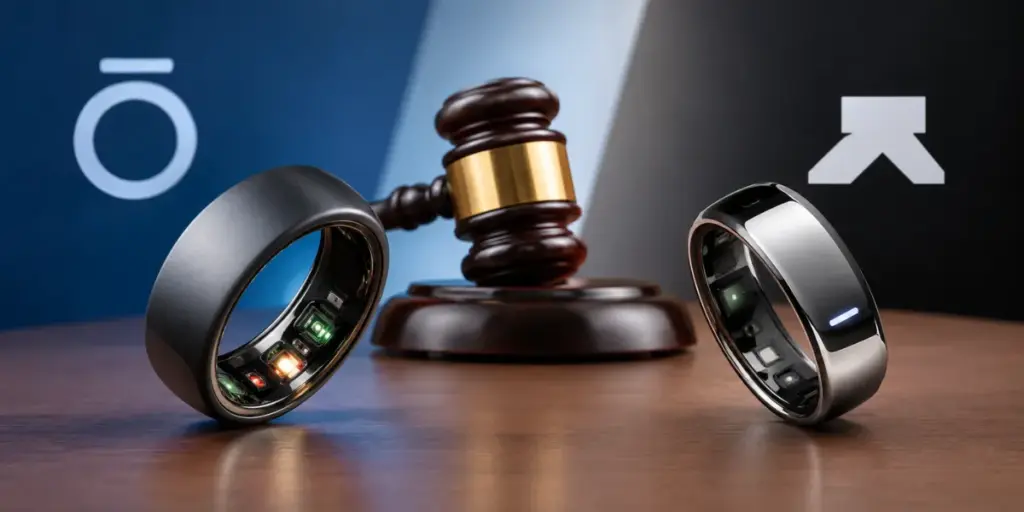
Oura has launched another legal battle against Indian smart-ring maker Ultrahuman, seeking to stop sales of its redesigned Ring Pro in the United States. The lawsuit comes just months after Ultrahuman secured a regulatory decision that allowed it to return to the American market following an earlier import ban.
Filed Thursday in a federal court in Texas, the complaint accuses Ultrahuman of infringing two Oura patents related to smart-ring design and internal technology, including batteries and sensors. Oura is seeking financial damages and a permanent court order that would prevent Ultrahuman from selling the Ring Pro in the U.S.
The dispute marks another chapter in the ongoing competition between the two companies, which have been involved in patent litigation since 2023. It also adds to Oura’s broader efforts to protect its intellectual property against competing smart-ring manufacturers.
Ultrahuman’s U.S. comeback faces another challenge
Ultrahuman introduced its redesigned Ring Pro in February, hoping to strengthen its position in the growing smart-ring market. In March, U.S. Customs and Border Protection issued a favorable ruling that cleared the way for the company to resume sales in the country.
That decision followed an import ban on Ultrahuman’s earlier Ring Air. The restriction took effect after Oura won a patent infringement ruling from the U.S. International Trade Commission (ITC) in August last year.
However, Oura argues that the customs decision addressed only the patent involved in the earlier dispute. According to the company, it did not resolve concerns involving two other patents cited in the latest lawsuit: D804,471 and 12,769,363.
“Ultrahuman has a history of copying Oura’s innovations, as demonstrated by the 2025 ITC ruling against the company,” an Oura spokesperson told TechCrunch.
The spokesperson added that Ultrahuman’s redesigned ring had not addressed what Oura considers continued patent infringement. Oura also accused its rival of trying to benefit from the technology and market position the company has built.
Newly issued patent becomes part of the case
One of the patents at the center of the lawsuit, numbered 12,769,363, was issued to Oura on October 20 — just two days before the company filed its complaint.
The patent covers a smart-ring design incorporating several internal components, including a curved battery, circuit board, magnets, and sensors.
Oura argues that the Ring Pro infringes the patents despite its redesign. In its filing, the company said it had been forced to pursue another lawsuit to protect its intellectual property rights.
The complaint also names SVTronics, an electronics manufacturer based in Texas, as a defendant. Oura alleges that SVTronics produces the Ring Pro at a facility in Plano, Texas, under Ultrahuman’s direction and control.
According to the lawsuit, both companies infringe Oura’s patents through activities involving the device’s manufacture, importation, and sale in the United States.
These allegations have not been established as findings in the new case.
Ultrahuman says it will fight the allegations
Ultrahuman co-founder and CEO Mohit Kumar said the company remains confident in its Ring Pro and intends to defend itself against Oura’s latest claims.
“Oura has now chosen to assert different patents, including one that issued just two days before this lawsuit was filed,” Kumar told TechCrunch.
He added that Ultrahuman would address the allegations through the appropriate legal process and defend its position vigorously.
Kumar also emphasized that no court order currently affects the Ring Pro and that the device remains available to customers in the U.S.
The case could create fresh uncertainty for Ultrahuman as it works to expand its presence in one of the world’s key consumer technology markets.
Oura’s patent battles extend beyond Ultrahuman
Oura’s legal disputes with Ultrahuman began in 2023, when it sued the Indian startup over its Ring Air. Ultrahuman had been using the product to establish itself in the U.S. smart-ring market.
In 2024, Oura filed a separate complaint with the U.S. International Trade Commission. The resulting ruling last year helped lead to the import ban on the Ring Air.
Oura has also pursued patent infringement claims against other smart-ring companies, including Samsung, RingConn, Circular, and Zepp Health.
Some disputes have resulted in licensing agreements. RingConn and Circular, for example, agreed to pay royalties to Oura to continue selling their products.
The latest lawsuit highlights how intellectual property rights are becoming an important battleground as more companies compete in the wearable technology industry.
Smart-ring market continues to attract competitors
Despite the legal disputes, the smart-ring category is continuing to expand. Research firm IDC expects global shipments to increase 12.8% this year to 4.9 million units. The market is projected to reach approximately 6.3 million units by 2030.
Oura remains a leading company in the segment, but Ultrahuman is among the competitors looking to capture a larger share of the market.
Ultrahuman has continued to attract investor interest. In September, the startup raised $70 million from investors including Qualcomm Ventures and Labcorp, giving it a reported valuation of approximately $365 million.
The company is also working with Qualcomm on a new smart ring designed to run more software directly on the device. The project reflects Ultrahuman’s ambitions to move beyond traditional health and fitness tracking into areas such as artificial intelligence interactions and gaming.
Meanwhile, Oura is continuing to develop its own products. Earlier this week, the company introduced new fitness metrics designed to help users understand how their workouts affect cardiovascular health.
However, Oura is also navigating uncertainty around its business plans. Just weeks before the latest lawsuit, the company shelved its planned $2.2 billion initial public offering, citing market “uncertainty.”
What happens next?
The latest case could determine whether Ultrahuman can continue selling its Ring Pro in the United States without facing further restrictions. For now, Kumar says the product remains available, and no court order has blocked its sales.
The outcome could also have wider implications for the smart-ring industry, where established players and newer entrants are competing through product innovation, investment, and increasingly, patent litigation.
As the market grows, the dispute between Oura and Ultrahuman underscores a central challenge for wearable technology companies: developing new products while navigating a complex web of patents and intellectual property claims.
Correction: This article includes comments from Ultrahuman co-founder and CEO Mohit Kumar regarding the latest lawsuit.
Also read : Spotify Tightens Family Plan Checks, Calls It a Routine Update