




Eric Wu’s NavigateAI Raises $25M to Tackle Construction’s Labor Crunch
5 min read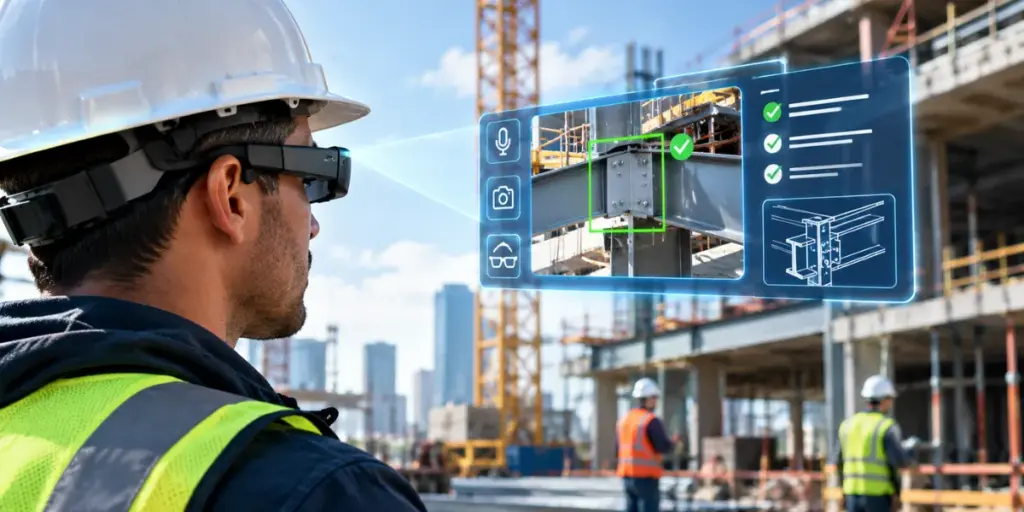
Eric Wu is back in startup mode, and this time he is looking beyond real estate transactions and into the people actually building physical infrastructure.
The former Opendoor CEO has launched NavigateAI, an AI startup focused on helping construction workers and other field laborers do their jobs with an AI-powered expert assistant. The company officially came out of stealth in late May with $25 million in seed funding at a $225 million post-money valuation.
The round was led by investor Elad Gil and included Khosla Ventures, Fifth Wall, homebuilder Lennar, Tishman Speyer, electrical contractor Helix Electric and several high-profile angel investors. Those angels include DoorDash CEO Tony Xu, Instacart co-founder Apoorva Mehta and Coinbase CEO Brian Armstrong.
For Wu, the decision to return to building a company came after spending much of his career at Opendoor. He stepped away from the real estate startup in 2022 after eight years, as rapidly rising interest rates put pressure on the housing market.
After taking about a year to reset, Wu considered moving into investing. Instead, the rise of AI pulled him back toward entrepreneurship.
He says he believed AI would become the defining technology platform of his lifetime and did not want to look back a decade later wishing he had participated.
Now, his focus is a major problem facing construction: not enough workers.
AI for the People Building Things
The construction industry has been dealing with a significant labor shortage. The Associated Builders and Contractors trade group estimates that about 349,000 additional workers would be needed this year simply to keep up with construction demand.
The pressure could increase as the existing workforce ages, U.S. immigration enforcement affects the availability of workers, and major construction projects continue to expand.
Data centers are a particularly important example.
The rapid growth of AI has created demand for enormous server campuses, which in turn require thousands of construction workers. A large data center campus that might once have required around 750 workers at peak construction can now need several thousand.
Meta’s Hyperion campus in Richland Parish, Louisiana, is reportedly expected to require roughly 5,000 construction workers, while OpenAI’s Stargate project in Abilene, Texas, has reportedly involved around 6,400 workers.
Staffing company Kelly has said that 90% of data center operators now identify staffing shortages as a critical constraint on their ability to build or expand.
That is the problem NavigateAI wants to attack.
The company’s pitch is essentially an AI coach that workers can use while they are on the job, without having to stop what they are doing.
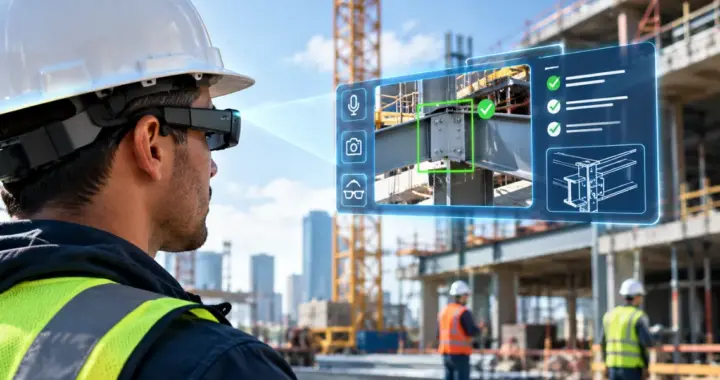
NavigateAI runs on smartphones and can also operate hands-free through Meta’s AI glasses. A worker can point a camera toward a construction task and ask questions in ordinary language.
Is something installed correctly? Is the torque right? Does the work meet building code?
The system can then access building specifications, manufacturer manuals and company policies in real time.
Wu argues that the hands-free experience is particularly important because workers should not have to constantly look down at a phone while performing physical work. NavigateAI is also working with Meta to get the glasses safety-certified for environments where protective eyewear is mandatory.
Training Workers to Use AI
NavigateAI is also working with AIM, a Meta-backed fiber installation trade school that guarantees job placement to graduates.
That partnership gives NavigateAI a way to introduce workers to AI-assisted workflows before they arrive at a construction site.
Getting workers comfortable with the technology could be critical to adoption. Wu says younger workers tend to embrace the product, while experienced journeymen with decades of trade knowledge can be much more hesitant.
That creates an interesting challenge for NavigateAI. The most experienced workers often have precisely the kind of practical knowledge that could make an AI assistant more useful, yet convincing them to rely on an AI system—or even wear computer glasses—may be difficult.
NavigateAI Wants a Share of the Savings
The startup initially used a token-and-margin pricing model similar to usage-based software. More recently, however, it has shifted newer contracts toward value-based pricing.
Under this model, NavigateAI gets a percentage of the savings it helps create.
For example, if the technology helps a builder bring the total cost of constructing a home down from $300,000 to $280,000, NavigateAI would capture roughly 20% of the $20,000 savings.
Wu points to Lennar as an example of the potential market. The major homebuilder spends approximately $9 billion annually on labor, installation and construction, according to Wu.
Even a 5% to 10% improvement could therefore represent hundreds of millions of dollars in potential value.
But the company’s biggest long-term asset may not be the software itself.
It could be the data.
Every project completed with NavigateAI can generate labeled, first-person video showing field workers performing construction and maintenance tasks correctly or incorrectly. Wu believes that this type of real-world dataset could eventually become extremely valuable to robotics companies trying to teach machines how to operate in physical environments.
The Challenges Are Just as Big
NavigateAI still has plenty to prove.
One obvious issue is determining exactly how much money the AI actually saves. If a project finishes faster, for example, it could be because of NavigateAI—or because the weather was better, the crew was different or materials arrived on time.
Wu acknowledges that proving the difference requires A/B testing across divisions and will remain approximate.
Safety is another major concern. If the AI approves a construction connection that later fails, questions around responsibility and defect liability could become complicated quickly.
There is also competition.
Today, workers can already search Google or ask ChatGPT for answers. NavigateAI believes its ability to combine AI with construction workflows, company-specific information and hands-free hardware gives it an advantage.
But the major AI companies have powerful language models, and Meta already has the hardware distribution through its smart glasses. Those companies could potentially move into the market themselves.
NavigateAI’s closer competitors, according to Wu, include Buildots and OpenSpace. However, he says those companies are more focused on project management, while NavigateAI is designed around the individual worker.
For now, the startup is betting that its combination of workflow integrations, proprietary data and industry relationships will create a strong advantage over time.
Wu also has a powerful network behind the company. Elad Gil previously invested in Opendoor, while Khosla Ventures’ Keith Rabois co-founded the real estate company. Khosla Ventures founder Vinod Khosla has also been a vocal supporter of AI companies building specialized AI “workers.”
Interestingly, NavigateAI does not yet have a board. Wu says he wants to go as long as possible without one so he can concentrate on customers rather than governance.
That preference may come from his experience running Opendoor, which became a public company through a SPAC in late 2020. As a public-company CEO, Wu found that managing boards and shareholders created a constant trade-off with the product-building work he wanted to focus on.
With NavigateAI, he appears determined to keep his attention on building.
And for Wu, the bigger risk may not be competition at all. It may be looking back years from now and wondering why he didn’t take the AI opportunity when he had the chance.
Also read : Apple’s Foldable iPhone Could Finally Arrive This Week