




Meta’s Moltbook Deal Signals a Bet on the Agentic Web
3 min read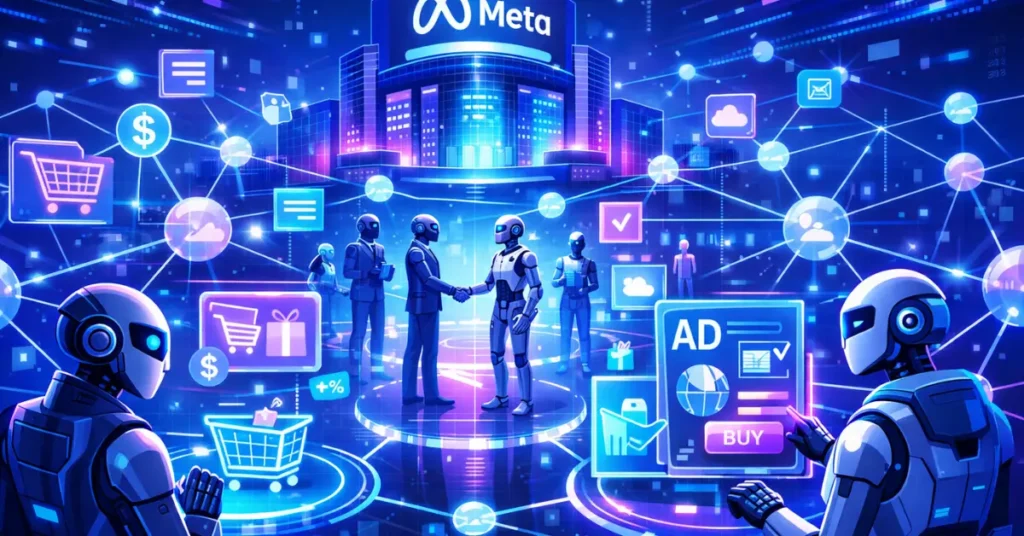
When reports surfaced that Meta had acquired Moltbook — a social network designed for AI agents — many observers were puzzled. After all, why would a company built on advertising want a platform where the “users” are mostly bots rather than people?
At first glance, the move seems strange. Advertisers typically want to reach human audiences, not automated software. But Meta has offered only a brief explanation, saying the Moltbook team will join its AI research group, Meta Superintelligence Labs, to explore “new ways for AI agents to work with people and businesses.”
Looking closer, the deal appears to be less about the platform itself and more about the talent behind it. In Silicon Valley terms, this kind of deal is often called an “acqui-hire” — buying a startup primarily for its team. Moltbook’s developers have been experimenting with ecosystems where AI agents interact with one another, and that expertise could prove valuable for Meta’s long-term plans.
A future filled with business AI agents
Mark Zuckerberg has already hinted at where he believes the internet is heading. He’s said that in the future, every company could have its own AI agent — similar to how businesses currently have email addresses, websites, and social media accounts.
In this emerging “agentic web,” AI systems would act on behalf of users or companies. These agents might handle tasks like booking travel, responding to customer inquiries, purchasing advertisements, or even negotiating deals with other AI agents.
AI already plays a growing role in advertising. It can generate marketing content, adjust campaigns in real time, and tailor ads based on who is viewing them. Businesses are also experimenting with AI to manage product pricing or create personalized promotions.
AI agents could shop for us
The consumer side of this trend could be even more transformative. AI agents may soon handle everyday tasks like searching for the best deals, making reservations, or buying products online. In some limited situations, these systems can already complete purchases and payments for users.
While so-called “agentic commerce” is still developing — and the technology isn’t always flawless — progress is happening quickly. Many experts expect these systems to improve significantly over the next few years.
From friend graph to “agent graph”
Meta built its early success by mapping relationships between people through what became known as the friend graph on Facebook. Now the company may be thinking about something similar for AI.
Imagine an “agent graph” — a network that maps how different AI agents connect and what tasks they can perform for one another. Such a system could link agents across industries like travel, online shopping, research, productivity tools, and entertainment.
Advertising could also evolve within this environment. Instead of persuading humans directly, a company’s AI agent might negotiate with a consumer’s agent. For example, your AI assistant might only buy a product if it meets certain conditions — a specific price, color, brand, or even environmental standards.
In that world, success wouldn’t just depend on showing ads to people. It would depend on algorithms deciding which product best matches a consumer’s preferences.
A strategic gamble
If Meta can position itself at the center of this “orchestration layer” — the system that determines how agents connect and interact — the company could expand its advertising business in entirely new ways.
Of course, this future depends on whether consumers are comfortable letting AI act on their behalf. Trust in autonomous systems remains a big question.
There may also be another, simpler reason behind the acquisition. Meta previously missed the chance to bring in developer Peter Steinberger, whose work helped power Moltbook, after he joined OpenAI. Buying Moltbook might have been a way to stay competitive — and keep Meta’s ambitious AI efforts in the spotlight.
Read also: Legora Hits $5.55B Valuation as AI Legal Tech Race Heats Up