

Artificial intelligence vs Art: Has Creativity Crossed a Dangerous Line?
3 min read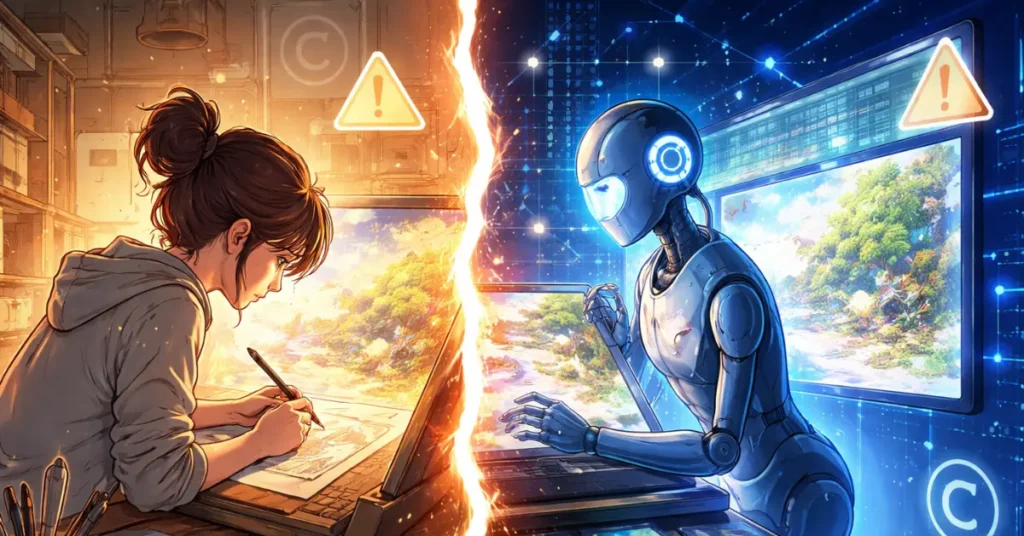
The debate around artificial intelligence and creative ownership is heating up—and the latest controversy involving Studio Ghibli has pushed it into the spotlight.
It started with a surprising example. Romanian tennis player Jaqueline Cristian shared an AI-generated image on Instagram that appeared to depict her in a style strikingly similar to Ghibli’s iconic animation. While visually impressive, the image raised uncomfortable questions: where does inspiration end and imitation begin?
A growing concern in the AI era
AI-generated art has come a long way, but its rapid progress is now colliding with long-standing ideas of ownership and originality. The concern isn’t just about one image—it’s about a broader shift. If AI can replicate the look and feel of a studio as distinctive as Studio Ghibli, what does that mean for artists everywhere?
Traditionally, copyright law has protected original works like films, illustrations, and designs. Under the Berne Convention for the Protection of Literary and Artistic Works, creators automatically own the rights to their work the moment it’s made. But there’s a catch: while individual creations are protected, artistic style is not.
This gap has become a major loophole in the age of AI.
The loophole AI exploits
AI systems are trained on massive datasets—often scraped from across the internet. That includes copyrighted material, sometimes used without permission. These models don’t copy a specific image; instead, they learn patterns and generate new visuals that closely resemble existing styles.
From a legal standpoint, companies argue this doesn’t violate copyright because no single piece is directly copied. But critics say this argument misses the bigger picture.
The spirit of intellectual property law is to protect creativity and ensure artists benefit from their work. When AI mimics a studio’s signature look, it risks undermining decades of artistic effort—without credit or compensation.
The economic impact on artists
This isn’t just a legal issue—it’s also a financial one. If businesses or individuals can generate Ghibli-style visuals instantly, they may no longer need to hire skilled illustrators or animators.
That could directly affect artists whose careers depend on these unique styles. It also threatens the value of established brands built over years of creative work.
Courts have historically ruled against uses of copyrighted material that compete with the original in the market. If AI-generated art begins replacing demand for authentic work, it could challenge the boundaries of “fair use.”
When imitation becomes confusion
Another major risk is misrepresentation. Studio Ghibli has built a globally recognized identity through its distinctive visual storytelling. When AI-generated content looks similar, audiences may struggle to tell what’s official and what’s not.
This brings trademark law into play. Laws like the Lanham Act aim to prevent consumer confusion and protect brand identity. If AI-generated art misleads viewers into thinking it’s connected to Ghibli, it could potentially cross into trademark infringement.
Laws struggling to keep up
The real challenge is that most intellectual property laws were created long before AI existed. They weren’t designed to handle machines that can learn, adapt, and recreate human creativity at scale.
Experts are now calling for reforms—such as requiring permission to use copyrighted works in AI training, setting clearer boundaries for commercial use, and even introducing new protections for artistic styles.
The bigger picture
The Ghibli controversy is just one example of a much larger shift. AI is now being used across art, music, and writing—often competing directly with human creators.
If left unchecked, this trend could devalue human creativity and make originality harder to protect. The core goal of intellectual property law has always been balance: encouraging innovation while protecting creators.
AI has the potential to enhance creativity—but without proper rules, it could just as easily erode it.
A turning point for creativity
The bigger concern isn’t just what AI can do today—it’s what it will be capable of tomorrow. If machines can replicate any artist’s style with ease, the very idea of originality could be at risk.
We may be approaching a tipping point where creativity can be copied, modified, and sold at scale—with little regard for the original creator.
And once that line is crossed, it may be difficult to draw it again.
Also read : Iran-Linked Hackers Claim FBI Chief Email Breach