





FISA Showdown: U.S. Lawmakers Clash Over Surveillance Powers
3 min read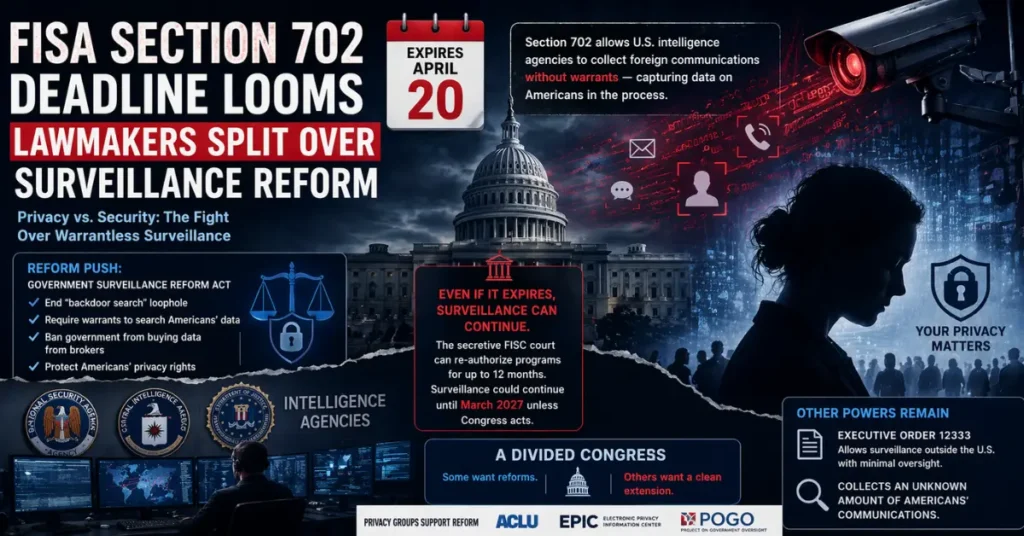
A major U.S. surveillance law is heading toward its deadline—and lawmakers are deeply divided on what comes next. As the expiration of Section 702 of the Foreign Intelligence Surveillance Act approaches, the debate is heating up over privacy, national security, and government overreach.
What’s at Stake?
Section 702 gives U.S. intelligence agencies—including the National Security Agency, CIA, and FBI—broad authority to collect communications of non-Americans located overseas, without needing individual warrants.
But here’s the catch: in the process of monitoring global communications, vast amounts of data involving Americans also get swept in. This includes emails, messages, and call records—raising serious concerns about privacy rights.
With the law set to expire on April 20, Congress is stuck in a stalemate. Some lawmakers want a clean extension, while others insist reforms are long overdue.
A Push for Reform Gains Momentum
A bipartisan group in Congress is pushing back, arguing that changes are “essential” to protect Americans from warrantless surveillance.
Leading the charge is Ron Wyden, alongside Mike Lee, who introduced the Government Surveillance Reform Act earlier this year. The proposal aims to close key loopholes in how intelligence agencies operate.
One major concern is the so-called “backdoor search” loophole, which allows agencies to search through Americans’ communications without a warrant—even if the original data collection targeted someone overseas.
Another controversial practice involves buying personal data from brokers. App developers often collect user location data and sell it to third parties, who then make it available to government agencies. According to FBI Director Kash Patel, the bureau has purchased such data without court approval.
Privacy advocates say this effectively lets agencies bypass legal safeguards.
Political Tensions Rise
Not everyone agrees on tightening the rules. A recent statement from Donald Trump suggests support for simply extending the law without changes.
Meanwhile, lawmakers are also using the issue as leverage in broader political negotiations, further complicating progress.
In a temporary move, House Republicans approved a short-term extension to April 30, buying more time for debate. The Senate must still approve this stopgap measure.
Surveillance Powers May Continue Anyway
Even if Section 702 technically expires, it doesn’t mean surveillance will stop overnight.
The Foreign Intelligence Surveillance Court (FISC) can authorize surveillance programs for up to a year at a time. This means current operations could legally continue into 2027 unless Congress actively intervenes.
Additionally, other authorities—like Executive Order 12333—allow U.S. agencies to conduct surveillance outside the country with minimal oversight.
Why This Debate Matters Now
As technology advances, so do surveillance capabilities. Governments can now analyze massive datasets using AI, making it easier than ever to track individuals.
That’s why privacy groups like the American Civil Liberties Union, Electronic Privacy Information Center, and Project on Government Oversight are backing reform efforts.
Senator Wyden has also warned that key details about how Section 702 is interpreted remain classified, leaving many lawmakers in the dark about its full impact.
The Road Ahead
With the deadline looming and no clear consensus, the future of one of America’s most powerful surveillance tools hangs in the balance.
Whether Congress opts for reform or renewal, one thing is certain: the outcome will shape how the U.S. balances national security with civil liberties in an increasingly digital world.
Also read : Google Blocks 8.3B Ads as AI Targets Bad Content